How to Conjugate Panteler in French
/pɑ̃t.le/
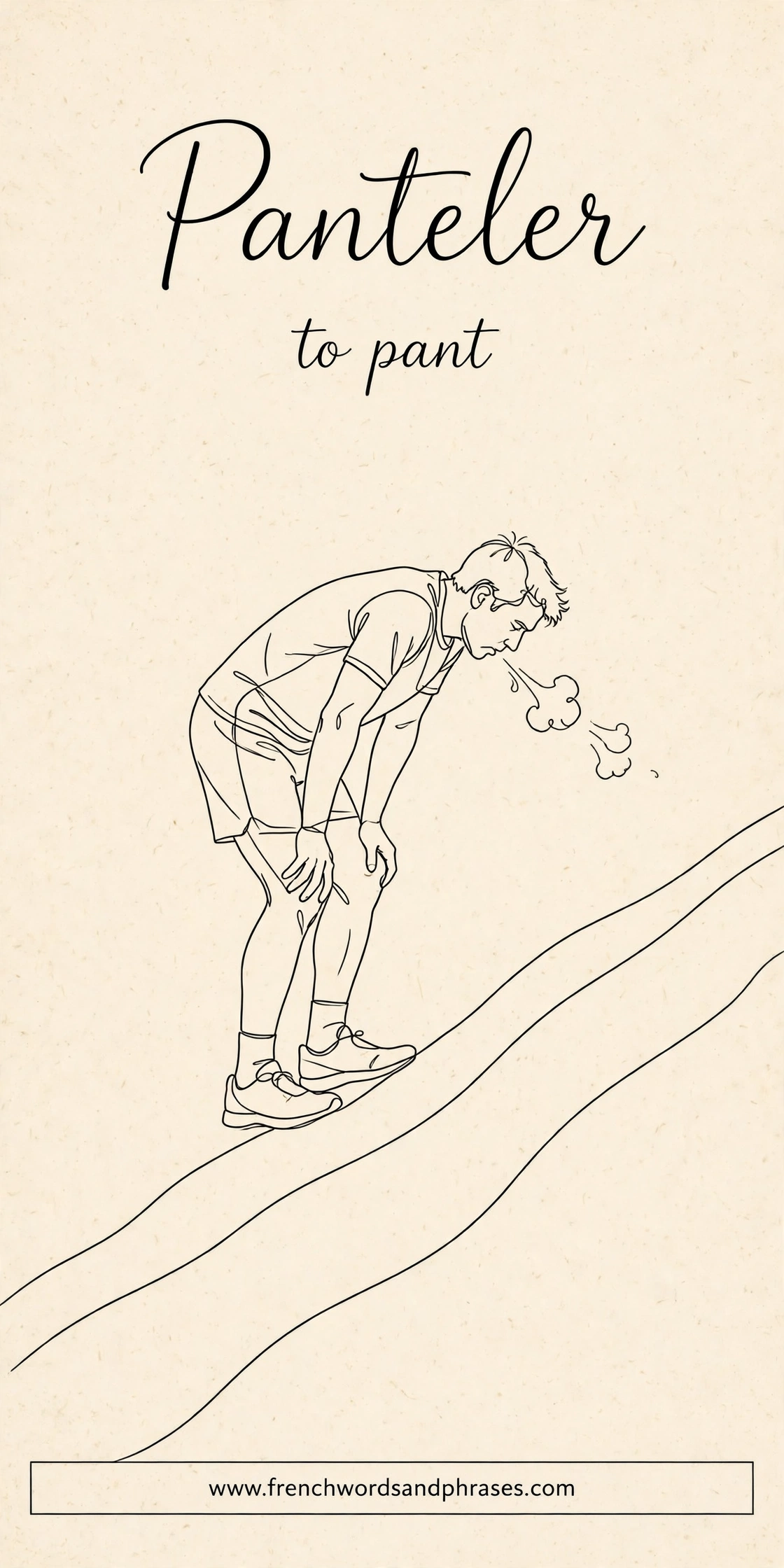
Panteler means to pant — to breathe fast and hard, tongue out, after effort or in the heat.
A dog stretched in the shade after a summer run, chest heaving; a horse blowing hard at the top of the hill; a runner bent double at the finish — panteler is the verb of breath that cannot keep up.
In this guide, you’ll learn how to conjugate panteler in all the major French tenses and moods. Explore complete conjugation tables, French examples, English translations, and practice quizzes.
Understanding the French Verb Panteler
Panteler is a regular French verb belonging to the first group of verbs, those ending in -er.
It means to pant. It is used above all of animals — dogs pantelent to cool themselves, horses after a climb — and of people only when they are utterly winded, bent over and gasping; for ordinary breathlessness French prefers être essoufflé. The word itself sounds breathless, and writers use it for engines, bellows and anything labouring in short gasps.
Verb classification: First group (-er)
Auxiliary verb: Avoir
Past participle: pantelé
Present participle: pantelant
English equivalents: To pant, to breathe hard; panteler après une course — to pant after a run; un chien qui pantelle — a panting dog; panteler de soif — to pant with thirst; panteler sous la chaleur — to pant in the heat.
One important detail: panteler belongs to the jeter family — the single l of the infinitive doubles wherever the next syllable is mute: je pantelle, tu pantelles, il pantelle, ils pantellent, and all through the future and conditional: je pantellerai, je pantellerais. The l stays single where the ending is sounded: nous pantelons, vous pantelez, je pantelais, en pantelant, and in the infinitive and participle, panteler, pantelé. The subjunctive splits the same way: que je pantelle, but que nous pantelions.
Experience the Word
Panteler is the verb of the heaving chest — breath arriving in short, hot, useless gulps.
Imagine a farm dog who has chased the postman’s bicycle the whole length of the lane in August. He arrives back at the gate, tongue to the ground, flanks pumping — il pantelle — and collapses in the one patch of shade as if he had run a marathon.
He is not ill or frightened. He is panting — pantelant, happily ruined by his own enthusiasm.
How to Conjugate Panteler: Complete French Conjugation Guide
Let’s explore every major conjugation of panteler, beginning with the indicative mood.
How to Conjugate Panteler in the Indicative Mood
The indicative mood is used to express facts, observations, actions, and events.
How to Conjugate Panteler in the Present Tense (Présent)
Used for actions happening now, habitual actions, and general truths.
| Subject | Conjugation |
|---|---|
| je | pantelle |
| tu | pantelles |
| il / elle | pantelle |
| nous | pantelons |
| vous | pantelez |
| ils / elles | pantellent |
Le chien pantelle après sa course dans le jardin.
The dog is panting after its run in the garden.
Complete the sentence:
Le chien ______ après la course.
Reveal the answer
pantelle
Le chien pantelle après la course.
The dog is panting after the run.
How to Conjugate Panteler in the Passé Composé
Used for completed actions in the past. Panteler takes the auxiliary verb avoir.
| Subject | Conjugation |
|---|---|
| j’ | ai pantelé |
| tu | as pantelé |
| il / elle | a pantelé |
| nous | avons pantelé |
| vous | avez pantelé |
| ils / elles | ont pantelé |
Le cheval a pantelé longtemps après l’effort.
The horse panted for a long time after the effort.
How to Conjugate Panteler in the Imparfait (Imperfect Tense)
Used for habitual past actions, descriptions, and ongoing situations in the past.
| Subject | Conjugation |
|---|---|
| je | pantelais |
| tu | pantelais |
| il / elle | pantelait |
| nous | pantelions |
| vous | panteliez |
| ils / elles | pantelaient |
Elle pantelait en haut des escaliers.
She was panting at the top of the stairs.
Choose the correct form:
After this hill, you will be panting.
Après cette côte, tu ______. (pantelleras / panteleras)
Reveal the answer
pantelleras
Après cette côte, tu pantelleras.
The future doubles the l, like jeter: je pantellerai.
How to Conjugate Panteler in the Plus-que-parfait
Used to describe an action that had already been completed before another past event.
| Subject | Conjugation |
|---|---|
| j’ | avais pantelé |
| tu | avais pantelé |
| il / elle | avait pantelé |
| nous | avions pantelé |
| vous | aviez pantelé |
| ils / elles | avaient pantelé |
Il avait pantelé pendant une heure avant de se calmer.
He had panted for an hour before calming down.
How to Conjugate Panteler in the Passé Simple
Primarily used in formal writing, literature, and historical narratives. It is rarely used in everyday conversation.
| Subject | Conjugation |
|---|---|
| je | pantelai |
| tu | pantelas |
| il / elle | pantela |
| nous | pantelâmes |
| vous | pantelâtes |
| ils / elles | pantelèrent |
Le chien pantela, la langue pendante, puis s’effondra à l’ombre.
The dog panted, its tongue hanging out, then collapsed in the shade.
How to Conjugate Panteler in the Passé Antérieur
A literary tense used to express an action completed immediately before another past action, generally in the passé simple.
| Subject | Conjugation |
|---|---|
| j’ | eus pantelé |
| tu | eus pantelé |
| il / elle | eut pantelé |
| nous | eûmes pantelé |
| vous | eûtes pantelé |
| ils / elles | eurent pantelé |
Quand le cheval eut pantelé un moment, il but enfin.
When the horse had panted for a while, it finally drank.
How to Conjugate Panteler in the Future Tense (Futur Simple)
Used to describe actions that will take place in the future.
| Subject | Conjugation |
|---|---|
| je | pantellerai |
| tu | pantelleras |
| il / elle | pantellera |
| nous | pantellerons |
| vous | pantellerez |
| ils / elles | pantelleront |
Après cette côte, le coureur pantellera encore longtemps.
After this hill, the runner will pant for a long time yet.
How to Conjugate Panteler in the Futur Antérieur (Future Perfect)
Used for an action that will have been completed before a particular point in the future.
| Subject | Conjugation |
|---|---|
| j’ | aurai pantelé |
| tu | auras pantelé |
| il / elle | aura pantelé |
| nous | aurons pantelé |
| vous | aurez pantelé |
| ils / elles | auront pantelé |
À l’arrivée, il aura pantelé pendant toute la montée.
At the finish, he will have panted the whole way up.
How to Conjugate Panteler in the Near Future (Futur Proche)
Used to describe something that is going to happen soon. Formed with aller + infinitive.
| Subject | Conjugation |
|---|---|
| je | vais panteler |
| tu | vas panteler |
| il / elle | va panteler |
| nous | allons panteler |
| vous | allez panteler |
| ils / elles | vont panteler |
Regarde ce chien, il va panteler tout l’après-midi.
Look at that dog, he is going to pant all afternoon.
How to Conjugate Panteler in the Conditional Mood
The conditional mood expresses what would happen under certain circumstances. It is also frequently used to make polite requests or express wishes.
How to Conjugate Panteler in the Present Conditional
| Subject | Conjugation |
|---|---|
| je | pantellerais |
| tu | pantellerais |
| il / elle | pantellerait |
| nous | pantellerions |
| vous | pantelleriez |
| ils / elles | pantelleraient |
Sans entraînement, tu pantellerais dès le premier kilomètre.
Without training, you would be panting from the first kilometre.
How to Conjugate Panteler in the Past Conditional
| Subject | Conjugation |
|---|---|
| j’ | aurais pantelé |
| tu | aurais pantelé |
| il / elle | aurait pantelé |
| nous | aurions pantelé |
| vous | auriez pantelé |
| ils / elles | auraient pantelé |
Il aurait pantelé moins avec de meilleures chaussures.
He would have panted less with better shoes.
Panteler in the Literary Past Conditional Form
This less common literary form uses the imperfect subjunctive of avoir.
| Subject | Conjugation |
|---|---|
| j’ | eusse pantelé |
| tu | eusses pantelé |
| il / elle | eût pantelé |
| nous | eussions pantelé |
| vous | eussiez pantelé |
| ils / elles | eussent pantelé |
Le cheval eût pantelé jusqu’au soir sans eau.
The horse would have panted until evening without water.
How to Conjugate Panteler in the Subjunctive Mood
The subjunctive is used to express wishes, emotions, doubts, necessity, and uncertainty. It frequently follows expressions such as il faut que (it is necessary that) or bien que (although).
How to Conjugate Panteler in the Present Subjunctive
| Subject | Conjugation |
|---|---|
| que je | pantelle |
| que tu | pantelles |
| qu’il / qu’elle | pantelle |
| que nous | pantelions |
| que vous | panteliez |
| qu’ils / qu’elles | pantellent |
Il est normal que le chien pantelle par cette chaleur.
It is normal for the dog to pant in this heat.
Complete the sentence using the subjunctive:
Il est normal que le chien ______ par cette chaleur.
Reveal the answer
pantelle
Il est normal que le chien pantelle par cette chaleur.
It is normal for the dog to pant in this heat.
How to Conjugate Panteler in the Imperfect Subjunctive
A literary tense, rarely encountered in modern spoken French.
| Subject | Conjugation |
|---|---|
| que je | pantelasse |
| que tu | pantelasses |
| qu’il / qu’elle | pantelât |
| que nous | pantelassions |
| que vous | pantelassiez |
| qu’ils / qu’elles | pantelassent |
Elle regardait le cheval, craignant qu’il pantelât encore.
She watched the horse, fearing it might still be panting.
How to Conjugate Panteler in the Pluperfect Subjunctive
A literary construction used to express an action completed before another past action.
| Subject | Conjugation |
|---|---|
| que j’ | eusse pantelé |
| que tu | eusses pantelé |
| qu’il / qu’elle | eût pantelé |
| que nous | eussions pantelé |
| que vous | eussiez pantelé |
| qu’ils / qu’elles | eussent pantelé |
On s’étonnait qu’il eût pantelé si longtemps.
People were surprised he had panted for so long.
How to Conjugate Panteler in the Past Subjunctive
| Subject | Conjugation |
|---|---|
| que j’ | aie pantelé |
| que tu | aies pantelé |
| qu’il / qu’elle | ait pantelé |
| que nous | ayons pantelé |
| que vous | ayez pantelé |
| qu’ils / qu’elles | aient pantelé |
Je suis surpris qu’elle ait pantelé pour si peu d’effort.
I am surprised she panted over so little effort.
How to Conjugate Panteler in the Imperative
The imperative is used to give commands, instructions, invitations, or suggestions. Subject pronouns are omitted.
How to Conjugate Panteler in the Present Imperative
| Person | Conjugation |
|---|---|
| (tu) | pantelle |
| (nous) | pantelons |
| (vous) | pantelez |
Pantelle un peu et calme-toi, mon chien !
Pant a little and calm down, old boy!
How would you say Pant a little and calm down (tu form)?
Reveal the answer
Pantelle un peu et calme-toi !
French Participles of Panteler
Participles are verb forms that can be used in compound tenses and other grammatical constructions.
Present Participle of Panteler
pantelant
En pantelant, le chien se rafraîchit.
By panting, the dog cools itself down.
Past Participle of Panteler
pantelé
Tout pantelé après la course, le chien s’est effondré à l’ombre.
All panting after the run, the dog collapsed in the shade.
Panteler in Everyday French: Real-Life Examples
Now that you know the conjugations, let’s see how panteler appears in everyday French.
Le chien pantelle après la course.
The dog is panting after the run.
Le cheval a pantelé longtemps.
The horse panted for a long time.
Elle pantelait en montant les escaliers.
She was panting as she climbed the stairs.
Tu pantelleras après cette côte.
You will be panting after this hill.
Il pantellerait moins avec plus d’entraînement.
He would pant less with more training.
Pantelle, mon chien, reprends ton souffle !
Pant, old boy, get your breath back!
Beyond Translation: The Meaning of Panteler
English pant and French panteler are cousins — both come down from a Greek word for the beating of the heart, and both still describe breath that arrives like a heartbeat: fast, hard and impossible to ignore.
The verb that sounds out of breath.
French mostly gives it to animals, and there is tenderness in it: a dog who pantelle has given everything to the chase, and the word carries the whole picture — tongue, flanks, shade, and pride.
How to Remember the French Verb Panteler
Remember it this way: Panteler is about the farm dog in the shade, tongue out, after the chase.
- Jeter-family spelling: the l doubles before a mute syllable — je pantelle, ils pantellent, je pantellerai.
- But nous pantelons, vous pantelez, je pantelais keep the single l — the ending there is sounded.
- It is the animals’ verb: dogs and horses pantelent; a winded person is usually essoufflé.
The key idea is the farm dog in the shade, tongue out, after the chase.
Test Your Knowledge of Panteler
Let’s see how much you’ve learned. Try answering these questions before revealing the answers.
Why does je pantelle have two l’s but nous pantelons only one?
Reveal the answer
The jeter rule — the l doubles before a mute syllable (je pantelle) and stays single where the ending is sounded (nous pantelons).
How do you say The dog is panting after the run in French?
Reveal the answer
Le chien pantelle après la course.
Translate: The horse panted for a long time.
Reveal the answer
Le cheval a pantelé longtemps.
What is the past participle of panteler?
Reveal the answer
Pantelé.
Complete the sentence:
Il est normal que le chien ______ par cette chaleur.
Reveal the answer
pantelle
Il est normal que le chien pantelle par cette chaleur.
It is normal for the dog to pant in this heat.
Can You Use It?
How would you say this in French?
The old dog pants in the shade of the lime tree, happy with his run and his nap.
Reveal the answer
Le vieux chien pantelle à l’ombre du tilleul, content de sa course et de sa sieste.
The old dog pants in the shade of the lime tree, happy with his run and his nap.
LEARN FRENCH ONE WORD AT A TIME