How to Conjugate Paniquer in French
/pa.ni.ke/
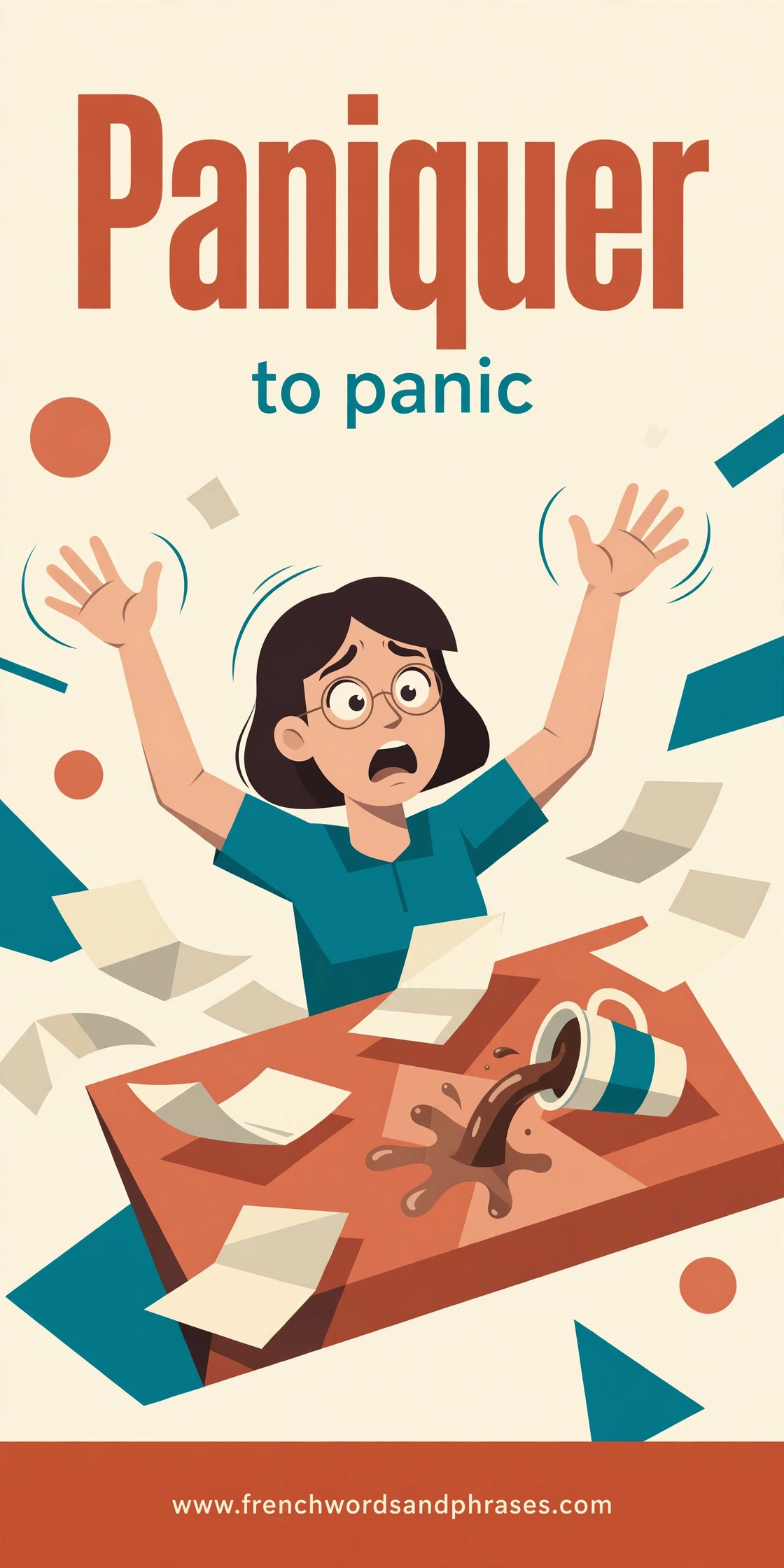
Paniquer means to panic — to lose your head in a sudden wave of fear, or to throw other people into one.
A fire alarm in a cinema, a rumour racing through a crowd, a train stopping dead in a dark tunnel — paniquer is the verb of the moment when calm snaps and fear takes the controls.
In this guide, you’ll learn how to conjugate paniquer in all the major French tenses and moods. Explore complete conjugation tables, French examples, English translations, and practice quizzes.
Understanding the French Verb Paniquer
Paniquer is a regular French verb belonging to the first group of verbs, those ending in -er.
It means to panic. It is used of crowds, markets and whole countries (les marchés paniquent — the markets are panicking), of people thrown into alarm by news, alarms and rumours, and, in the transitive use, of anything that frightens someone badly. The tone is everyday, never literary.
Verb classification: First group (-er)
Auxiliary verb: Avoir
Past participle: paniqué
Present participle: paniquant
English equivalents: To panic, to throw into panic; paniquer quelqu’un — to panic someone, to scare them witless; ne panique pas ! — don’t panic!; la foule panique — the crowd panics; ça me panique — that panics me.
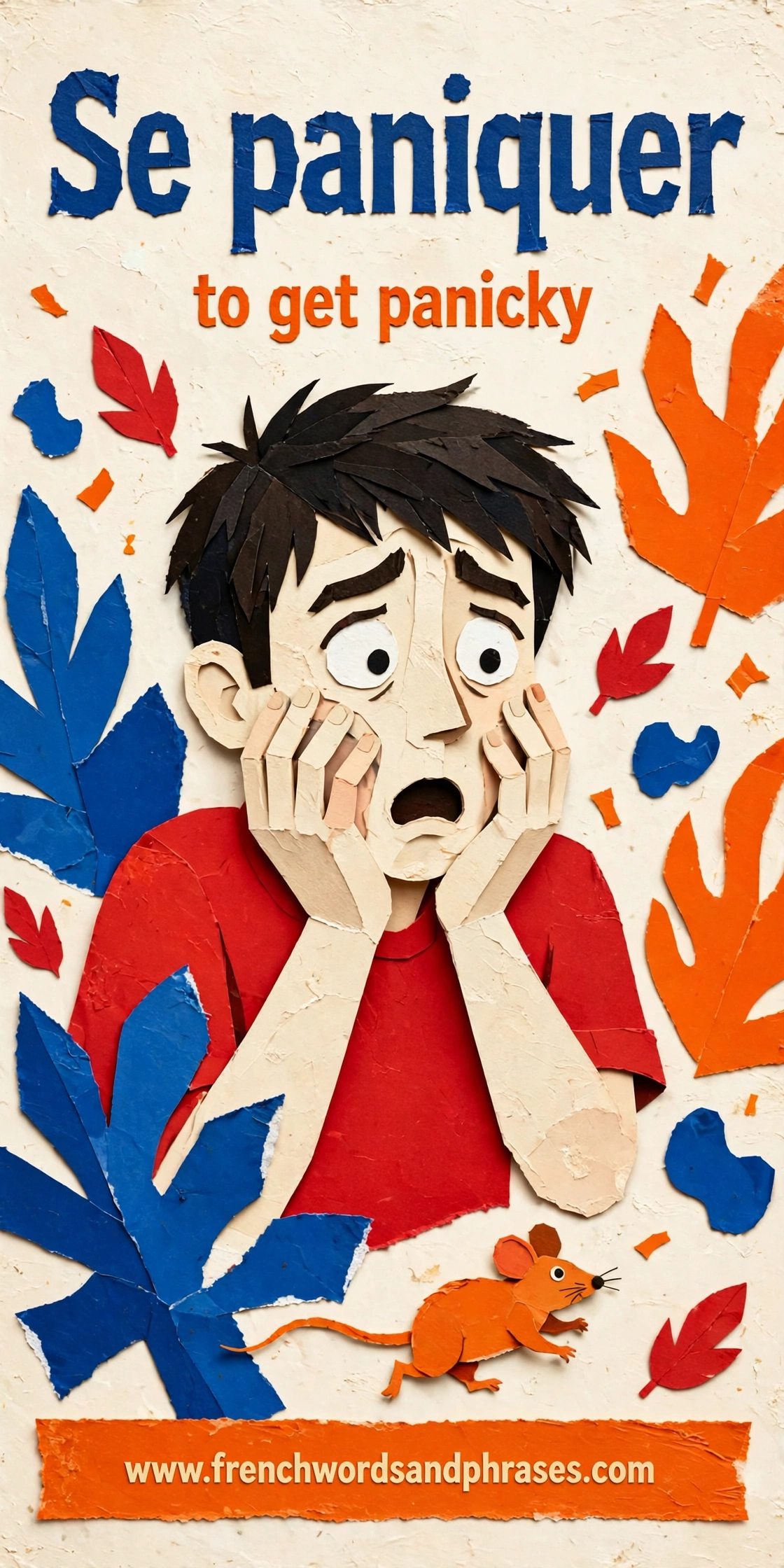
One important detail: paniquer keeps its qu in every form, so the /k/ sound never softens: je panique, nous paniquons, ils paniquent, en paniquant. The verb works two ways: transitively — cette nouvelle a paniqué tout le quartier, the news panicked the whole neighbourhood — and intransitively, like English: les voyageurs paniquent. Its reflexive twin se paniquer is the everyday, slightly sheepish version: to get panicky, to work yourself into a state.
Experience the Word
Paniquer is the verb of the snapped moment — one alarm, one rumour, and a hundred calm people become a crowd.
Imagine a train that stops between two stations, lights flickering. For ten seconds nobody moves; then a voice cries fire, and the carriage panique — bags grabbed, doors forced, strangers climbing over strangers, all for a smell of warm brakes.
Nothing had actually happened. The fear itself was the event — la panique, spread by paniquer.
How to Conjugate Paniquer: Complete French Conjugation Guide
Let’s explore every major conjugation of paniquer, beginning with the indicative mood.
How to Conjugate Paniquer in the Indicative Mood
The indicative mood is used to express facts, observations, actions, and events.
How to Conjugate Paniquer in the Present Tense (Présent)
Used for actions happening now, habitual actions, and general truths.
| Subject | Conjugation |
|---|---|
| je | panique |
| tu | paniques |
| il / elle | panique |
| nous | paniquons |
| vous | paniquez |
| ils / elles | paniquent |
Les voyageurs paniquent quand le train s’arrête dans le tunnel.
The passengers panic when the train stops in the tunnel.
Complete the sentence:
Nous ne ______ jamais en cas d’alerte.
Reveal the answer
paniquons
Nous ne paniquons jamais en cas d’alerte.
We never panic in an emergency.
How to Conjugate Paniquer in the Passé Composé
Used for completed actions in the past. Paniquer takes the auxiliary verb avoir.
| Subject | Conjugation |
|---|---|
| j’ | ai paniqué |
| tu | as paniqué |
| il / elle | a paniqué |
| nous | avons paniqué |
| vous | avez paniqué |
| ils / elles | ont paniqué |
La sirène a paniqué tout le quartier.
The siren threw the whole neighbourhood into panic.
How to Conjugate Paniquer in the Imparfait (Imperfect Tense)
Used for habitual past actions, descriptions, and ongoing situations in the past.
| Subject | Conjugation |
|---|---|
| je | paniquais |
| tu | paniquais |
| il / elle | paniquait |
| nous | paniquions |
| vous | paniquiez |
| ils / elles | paniquaient |
Elle paniquait dès qu’elle entendait un bruit bizarre.
She used to panic as soon as she heard a strange noise.
Choose the correct form:
The news panicked the whole village.
La nouvelle ______ tout le village. (a paniqué / est paniqué)
Reveal the answer
a paniqué
La nouvelle a paniqué tout le village.
Paniquer takes avoir, even in its transitive use.
How to Conjugate Paniquer in the Plus-que-parfait
Used to describe an action that had already been completed before another past event.
| Subject | Conjugation |
|---|---|
| j’ | avais paniqué |
| tu | avais paniqué |
| il / elle | avait paniqué |
| nous | avions paniqué |
| vous | aviez paniqué |
| ils / elles | avaient paniqué |
Les marchés avaient paniqué avant même l’annonce officielle.
The markets had panicked even before the official announcement.
How to Conjugate Paniquer in the Passé Simple
Primarily used in formal writing, literature, and historical narratives. It is rarely used in everyday conversation.
| Subject | Conjugation |
|---|---|
| je | paniquai |
| tu | paniquas |
| il / elle | paniqua |
| nous | paniquâmes |
| vous | paniquâtes |
| ils / elles | paniquèrent |
À la première secousse, la salle paniqua.
At the first tremor, the hall panicked.
How to Conjugate Paniquer in the Passé Antérieur
A literary tense used to express an action completed immediately before another past action, generally in the passé simple.
| Subject | Conjugation |
|---|---|
| j’ | eus paniqué |
| tu | eus paniqué |
| il / elle | eut paniqué |
| nous | eûmes paniqué |
| vous | eûtes paniqué |
| ils / elles | eurent paniqué |
Quand la fumée eut paniqué les spectateurs, les portes s’ouvrirent.
When the smoke had panicked the audience, the doors opened.
How to Conjugate Paniquer in the Future Tense (Futur Simple)
Used to describe actions that will take place in the future.
| Subject | Conjugation |
|---|---|
| je | paniquerai |
| tu | paniqueras |
| il / elle | paniquera |
| nous | paniquerons |
| vous | paniquerez |
| ils / elles | paniqueront |
Si l’alarme sonne encore, tout l’immeuble paniquera.
If the alarm rings again, the whole building will panic.
How to Conjugate Paniquer in the Futur Antérieur (Future Perfect)
Used for an action that will have been completed before a particular point in the future.
| Subject | Conjugation |
|---|---|
| j’ | aurai paniqué |
| tu | auras paniqué |
| il / elle | aura paniqué |
| nous | aurons paniqué |
| vous | aurez paniqué |
| ils / elles | auront paniqué |
À la fin de la journée, les marchés auront paniqué trois fois.
By the end of the day, the markets will have panicked three times.
How to Conjugate Paniquer in the Near Future (Futur Proche)
Used to describe something that is going to happen soon. Formed with aller + infinitive.
| Subject | Conjugation |
|---|---|
| je | vais paniquer |
| tu | vas paniquer |
| il / elle | va paniquer |
| nous | allons paniquer |
| vous | allez paniquer |
| ils / elles | vont paniquer |
Ne crie pas, tu vas paniquer les enfants.
Don’t shout, you are going to panic the children.
How to Conjugate Paniquer in the Conditional Mood
The conditional mood expresses what would happen under certain circumstances. It is also frequently used to make polite requests or express wishes.
How to Conjugate Paniquer in the Present Conditional
| Subject | Conjugation |
|---|---|
| je | paniquerais |
| tu | paniquerais |
| il / elle | paniquerait |
| nous | paniquerions |
| vous | paniqueriez |
| ils / elles | paniqueraient |
Un rien paniquerait cette foule nerveuse.
The slightest thing would panic this nervous crowd.
How to Conjugate Paniquer in the Past Conditional
| Subject | Conjugation |
|---|---|
| j’ | aurais paniqué |
| tu | aurais paniqué |
| il / elle | aurait paniqué |
| nous | aurions paniqué |
| vous | auriez paniqué |
| ils / elles | auraient paniqué |
Cette rumeur aurait paniqué le village entier autrefois.
That rumour would have panicked the whole village in the old days.
Paniquer in the Literary Past Conditional Form
This less common literary form uses the imperfect subjunctive of avoir.
| Subject | Conjugation |
|---|---|
| j’ | eusse paniqué |
| tu | eusses paniqué |
| il / elle | eût paniqué |
| nous | eussions paniqué |
| vous | eussiez paniqué |
| ils / elles | eussent paniqué |
La foule eût paniqué sans les haut-parleurs.
The crowd would have panicked without the loudspeakers.
How to Conjugate Paniquer in the Subjunctive Mood
The subjunctive is used to express wishes, emotions, doubts, necessity, and uncertainty. It frequently follows expressions such as il faut que (it is necessary that) or bien que (although).
How to Conjugate Paniquer in the Present Subjunctive
| Subject | Conjugation |
|---|---|
| que je | panique |
| que tu | paniques |
| qu’il / qu’elle | panique |
| que nous | paniquions |
| que vous | paniquiez |
| qu’ils / qu’elles | paniquent |
Il ne faut pas que les passagers paniquent.
The passengers must not panic.
Complete the sentence using the subjunctive:
Il ne faut pas que tu ______ pour si peu.
Reveal the answer
paniques
Il ne faut pas que tu paniques pour si peu.
You must not panic over so little.
How to Conjugate Paniquer in the Imperfect Subjunctive
A literary tense, rarely encountered in modern spoken French.
| Subject | Conjugation |
|---|---|
| que je | paniquasse |
| que tu | paniquasses |
| qu’il / qu’elle | paniquât |
| que nous | paniquassions |
| que vous | paniquassiez |
| qu’ils / qu’elles | paniquassent |
On craignait que la foule paniquât avant l’arrivée des secours.
People feared the crowd might panic before help arrived.
How to Conjugate Paniquer in the Pluperfect Subjunctive
A literary construction used to express an action completed before another past action.
| Subject | Conjugation |
|---|---|
| que j’ | eusse paniqué |
| que tu | eusses paniqué |
| qu’il / qu’elle | eût paniqué |
| que nous | eussions paniqué |
| que vous | eussiez paniqué |
| qu’ils / qu’elles | eussent paniqué |
On racontait que les marchés eussent paniqué pour une simple rumeur.
People said the markets had panicked over a mere rumour.
How to Conjugate Paniquer in the Past Subjunctive
| Subject | Conjugation |
|---|---|
| que j’ | aie paniqué |
| que tu | aies paniqué |
| qu’il / qu’elle | ait paniqué |
| que nous | ayons paniqué |
| que vous | ayez paniqué |
| qu’ils / qu’elles | aient paniqué |
Je suis étonné que cette nouvelle t’ait paniqué à ce point.
I am amazed that this news panicked you so much.
How to Conjugate Paniquer in the Imperative
The imperative is used to give commands, instructions, invitations, or suggestions. Subject pronouns are omitted.
How to Conjugate Paniquer in the Present Imperative
| Person | Conjugation |
|---|---|
| (tu) | panique |
| (nous) | paniquons |
| (vous) | paniquez |
Ne paniquez pas, suivez les issues de secours !
Do not panic, follow the emergency exits!
How would you say Don’t panic (tu form)?
Reveal the answer
Ne panique pas !
French Participles of Paniquer
Participles are verb forms that can be used in compound tenses and other grammatical constructions.
Present Participle of Paniquer
paniquant
En paniquant les passagers, il a aggravé la situation.
By panicking the passengers, he made the situation worse.
Past Participle of Paniquer
paniqué
Paniquée par la sirène, la foule s’est précipitée dehors.
Panicked by the siren, the crowd rushed outside.
Paniquer in Everyday French: Real-Life Examples
Now that you know the conjugations, let’s see how paniquer appears in everyday French.
Les voyageurs paniquent dans le tunnel.
The passengers are panicking in the tunnel.
La sirène a paniqué tout le quartier.
The siren panicked the whole neighbourhood.
Elle paniquait pour un rien.
She used to panic over nothing.
Tout l’immeuble paniquera si l’alarme sonne.
The whole building will panic if the alarm rings.
Un rien paniquerait cette foule.
The slightest thing would panic this crowd.
Ne panique pas, tout va bien !
Don’t panic, everything is fine!
Beyond Translation: The Meaning of Paniquer
The word carries a goat-footed god inside it: panique comes from Pan, the Greek god whose sudden shout in lonely places was said to scatter armies with groundless terror.
Fear with no object.
That is still the heart of paniquer — not ordinary fear of something real, but the contagious, stampeding kind, the kind that empties cinemas and crashes markets in an afternoon.
How to Remember the French Verb Paniquer
Remember it this way: Paniquer is about the god Pan’s shout — a crowd scattering at a rumour.
- Paniquer comes from Pan, the god of sudden, contagious fear — la panique.
- The qu never changes: je panique, nous paniquons, en paniquant — always /k/.
- It works both ways: la foule panique (the crowd panics) and ça me panique (that panics me).
The key idea is the god Pan’s shout — a crowd scattering at a rumour.
Test Your Knowledge of Paniquer
Let’s see how much you’ve learned. Try answering these questions before revealing the answers.
Which Greek god hides inside the word paniquer?
Reveal the answer
Pan — his sudden shout was said to cause groundless, contagious terror: la panique.
How do you say The passengers panic in the tunnel in French?
Reveal the answer
Les voyageurs paniquent dans le tunnel.
Translate: The siren panicked the whole neighbourhood.
Reveal the answer
La sirène a paniqué tout le quartier.
What is the past participle of paniquer?
Reveal the answer
Paniqué — agreeing with a feminine subject: paniquée.
Complete the sentence:
Il ne faut pas que les passagers ______.
Reveal the answer
paniquent
Il ne faut pas que les passagers paniquent.
The passengers must not panic.
Can You Use It?
How would you say this in French?
When the alarm rang, nobody panicked: everyone filed out calmly.
Reveal the answer
Quand l’alarme a sonné, personne n’a paniqué : tout le monde est sorti en file, calmement.
When the alarm rang, nobody panicked: everyone filed out calmly.
LEARN FRENCH ONE WORD AT A TIME