How to Conjugate Panifier in French
/pa.ni.fje/
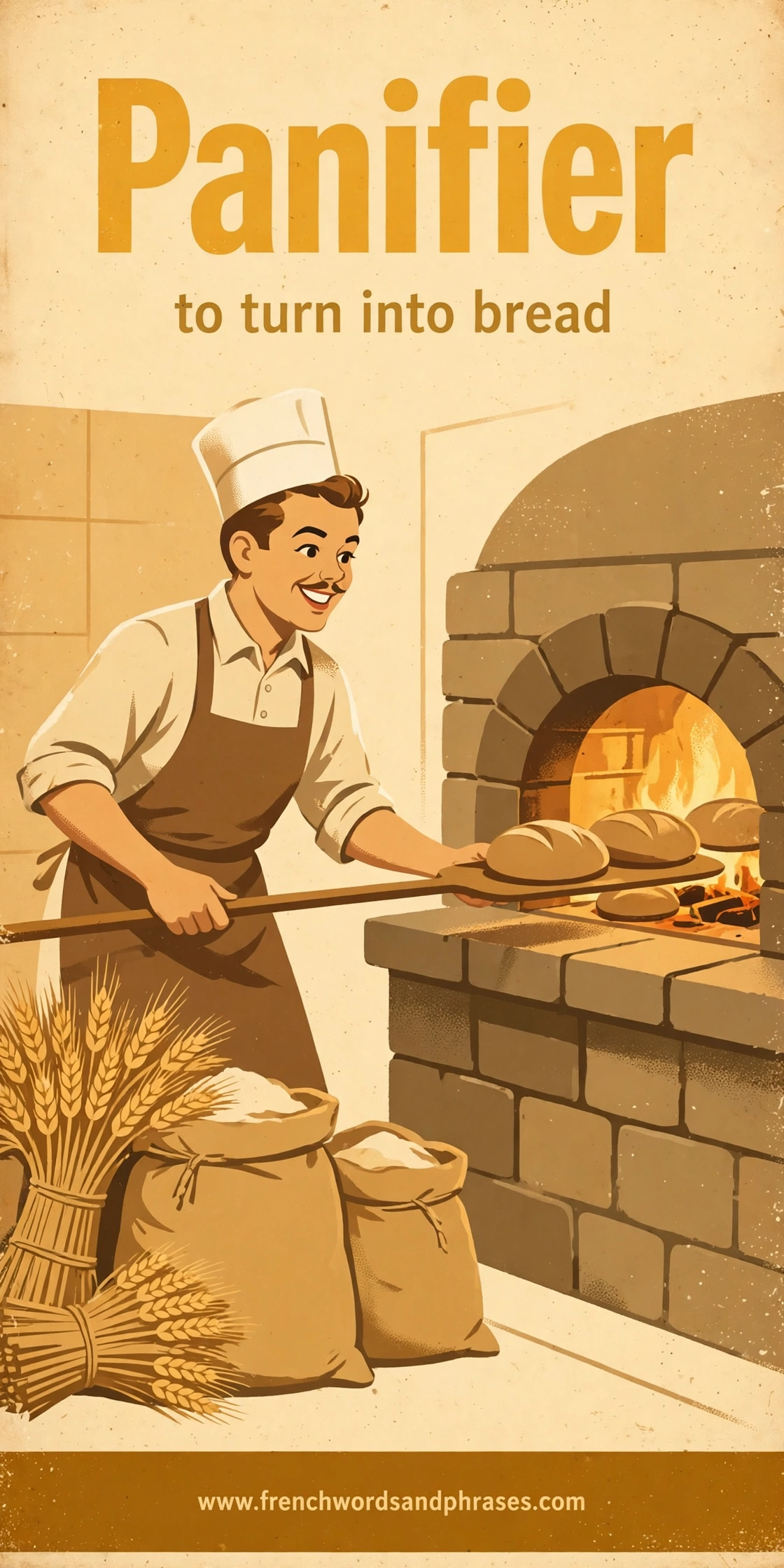
Panifier means to turn into bread — to transform flour, by kneading, leavening and baking, into loaves.
Sacks of flour at dawn, the trough, the yeast, the long slow rise — panifier is the baker’s technical verb for the whole miracle by which a grey powder becomes the warm, crusty centre of the French table.
In this guide, you’ll learn how to conjugate panifier in all the major French tenses and moods. Explore complete conjugation tables, French examples, English translations, and practice quizzes.
Understanding the French Verb Panifier
Panifier is a regular French verb belonging to the first group of verbs, those ending in -er.
It means to turn into bread. It is a technical verb of the baking trade and of food science: mills and bakeries panifient flour, and agronomists test whether a wheat is panifiable — fit to become bread. In everyday speech people simply say faire du pain; panifier belongs to the workshop, the laboratory and the label.
Verb classification: First group (-er)
Auxiliary verb: Avoir
Past participle: panifié
Present participle: panifiant
English equivalents: To turn into bread, to make bread from; panifier la farine — to turn flour into bread; panifier le blé — to make bread from wheat; la panification — bread-making; une farine panifiable — a bread-making flour.
One important detail: panifier is an -ier verb, and -ier verbs double the i wherever an i-ending follows an i-stem: nous panifiions in the imperfect and que nous panifiions in the subjunctive — two i’s in a row, and both are written. Everywhere else it behaves like any regular -er verb: je panifie, nous panifions, j’ai panifié. The family is transparent: pain (bread) plus the maker suffix -fier, as in la panification, the baker’s word for bread-making.
Experience the Word
Panifier is the verb of the transformation — flour goes in one end of the bakery, bread comes out of the other.
Imagine the back room of a village bakery at four in the morning. The baker tips the flour into the trough, adds water, salt and levain, and sets the dough to rise — by six o’clock he will have panifié fifty kilos of flour, and the whole street will smell of it.
The flour has not just been cooked. It has been turned into bread — panifiée, risen, crusted, alive.
How to Conjugate Panifier: Complete French Conjugation Guide
Let’s explore every major conjugation of panifier, beginning with the indicative mood.
How to Conjugate Panifier in the Indicative Mood
The indicative mood is used to express facts, observations, actions, and events.
How to Conjugate Panifier in the Present Tense (Présent)
Used for actions happening now, habitual actions, and general truths.
| Subject | Conjugation |
|---|---|
| je | panifie |
| tu | panifies |
| il / elle | panifie |
| nous | panifions |
| vous | panifiez |
| ils / elles | panifient |
Cette boulangerie panifie une farine locale.
This bakery turns a local flour into bread.
Complete the sentence:
Nous ______ notre blé nous-mêmes.
Reveal the answer
panifiions
Nous panifiions notre blé nous-mêmes.
We used to make bread from our own wheat — note the double i of -ier verbs in the imperfect.
How to Conjugate Panifier in the Passé Composé
Used for completed actions in the past. Panifier takes the auxiliary verb avoir.
| Subject | Conjugation |
|---|---|
| j’ | ai panifié |
| tu | as panifié |
| il / elle | a panifié |
| nous | avons panifié |
| vous | avez panifié |
| ils / elles | ont panifié |
Le boulanger a panifié cent kilos de farine cette nuit.
The baker turned a hundred kilos of flour into bread last night.
How to Conjugate Panifier in the Imparfait (Imperfect Tense)
Used for habitual past actions, descriptions, and ongoing situations in the past.
| Subject | Conjugation |
|---|---|
| je | panifiais |
| tu | panifiais |
| il / elle | panifiait |
| nous | panifiions |
| vous | panifiiez |
| ils / elles | panifiaient |
Autrefois, chaque village panifiait son propre blé.
In the old days, every village made bread from its own wheat.
Choose the correct form:
The bakery turns a local flour into bread.
La boulangerie ______ une farine locale. (panifie / panifit)
Reveal the answer
panifie
La boulangerie panifie une farine locale.
Panifier is an -er verb: je panifie, elle panifie.
How to Conjugate Panifier in the Plus-que-parfait
Used to describe an action that had already been completed before another past event.
| Subject | Conjugation |
|---|---|
| j’ | avais panifié |
| tu | avais panifié |
| il / elle | avait panifié |
| nous | avions panifié |
| vous | aviez panifié |
| ils / elles | avaient panifié |
Ils avaient panifié le seigle avant la fête du village.
They had turned the rye into bread before the village festival.
How to Conjugate Panifier in the Passé Simple
Primarily used in formal writing, literature, and historical narratives. It is rarely used in everyday conversation.
| Subject | Conjugation |
|---|---|
| je | panifiai |
| tu | panifias |
| il / elle | panifia |
| nous | panifiâmes |
| vous | panifiâtes |
| ils / elles | panifièrent |
Le fournil panifia la récolte de tout le hameau.
The bakehouse turned the whole hamlet’s harvest into bread.
How to Conjugate Panifier in the Passé Antérieur
A literary tense used to express an action completed immediately before another past action, generally in the passé simple.
| Subject | Conjugation |
|---|---|
| j’ | eus panifié |
| tu | eus panifié |
| il / elle | eut panifié |
| nous | eûmes panifié |
| vous | eûtes panifié |
| ils / elles | eurent panifié |
Quand il eut panifié la farine, il alluma le four.
When he had turned the flour into dough, he lit the oven.
How to Conjugate Panifier in the Future Tense (Futur Simple)
Used to describe actions that will take place in the future.
| Subject | Conjugation |
|---|---|
| je | panifierai |
| tu | panifieras |
| il / elle | panifiera |
| nous | panifierons |
| vous | panifierez |
| ils / elles | panifieront |
Cette machine panifiera cent kilos de farine par jour.
This machine will turn a hundred kilos of flour into bread per day.
How to Conjugate Panifier in the Futur Antérieur (Future Perfect)
Used for an action that will have been completed before a particular point in the future.
| Subject | Conjugation |
|---|---|
| j’ | aurai panifié |
| tu | auras panifié |
| il / elle | aura panifié |
| nous | aurons panifié |
| vous | aurez panifié |
| ils / elles | auront panifié |
À l’aube, le boulanger aura panifié toute la farine du silo.
By dawn, the baker will have turned all the flour in the silo into bread.
How to Conjugate Panifier in the Near Future (Futur Proche)
Used to describe something that is going to happen soon. Formed with aller + infinitive.
| Subject | Conjugation |
|---|---|
| je | vais panifier |
| tu | vas panifier |
| il / elle | va panifier |
| nous | allons panifier |
| vous | allez panifier |
| ils / elles | vont panifier |
Nous allons panifier le blé nouveau ce week-end.
We are going to make bread from the new wheat this weekend.
How to Conjugate Panifier in the Conditional Mood
The conditional mood expresses what would happen under certain circumstances. It is also frequently used to make polite requests or express wishes.
How to Conjugate Panifier in the Present Conditional
| Subject | Conjugation |
|---|---|
| je | panifierais |
| tu | panifierais |
| il / elle | panifierait |
| nous | panifierions |
| vous | panifieriez |
| ils / elles | panifieraient |
Avec un meilleur levain, ils panifieraient ce seigle sans peine.
With a better starter, they would turn this rye into bread easily.
How to Conjugate Panifier in the Past Conditional
| Subject | Conjugation |
|---|---|
| j’ | aurais panifié |
| tu | aurais panifié |
| il / elle | aurait panifié |
| nous | aurions panifié |
| vous | auriez panifié |
| ils / elles | auraient panifié |
Tu aurais panifié la farine si le four avait chauffé.
You would have turned the flour into bread if the oven had heated up.
Panifier in the Literary Past Conditional Form
This less common literary form uses the imperfect subjunctive of avoir.
| Subject | Conjugation |
|---|---|
| j’ | eusse panifié |
| tu | eusses panifié |
| il / elle | eût panifié |
| nous | eussions panifié |
| vous | eussiez panifié |
| ils / elles | eussent panifié |
Il eût panifié le seigle plutôt que le blé, par goût.
He would have made bread from the rye rather than the wheat, by taste.
How to Conjugate Panifier in the Subjunctive Mood
The subjunctive is used to express wishes, emotions, doubts, necessity, and uncertainty. It frequently follows expressions such as il faut que (it is necessary that) or bien que (although).
How to Conjugate Panifier in the Present Subjunctive
| Subject | Conjugation |
|---|---|
| que je | panifie |
| que tu | panifies |
| qu’il / qu’elle | panifie |
| que nous | panifiions |
| que vous | panifiiez |
| qu’ils / qu’elles | panifient |
Il faut que le meunier panifie ce blé avant l’hiver.
The miller must turn this wheat into bread before winter.
Complete the sentence using the subjunctive:
Il faut que nous ______ ce blé avant l’hiver.
Reveal the answer
panifiions
Il faut que nous panifiions ce blé avant l’hiver.
We must turn this wheat into bread before winter — double i again in the subjunctive.
How to Conjugate Panifier in the Imperfect Subjunctive
A literary tense, rarely encountered in modern spoken French.
| Subject | Conjugation |
|---|---|
| que je | panifiasse |
| que tu | panifiasses |
| qu’il / qu’elle | panifiât |
| que nous | panifiassions |
| que vous | panifiassiez |
| qu’ils / qu’elles | panifiassent |
Le maître voulait que l’apprenti panifiât seul la fournée.
The master wanted the apprentice to make the batch of bread on his own.
How to Conjugate Panifier in the Pluperfect Subjunctive
A literary construction used to express an action completed before another past action.
| Subject | Conjugation |
|---|---|
| que j’ | eusse panifié |
| que tu | eusses panifié |
| qu’il / qu’elle | eût panifié |
| que nous | eussions panifié |
| que vous | eussiez panifié |
| qu’ils / qu’elles | eussent panifié |
On admirait qu’ils eussent panifié tant de farine en une nuit.
People admired that they had turned so much flour into bread in one night.
How to Conjugate Panifier in the Past Subjunctive
| Subject | Conjugation |
|---|---|
| que j’ | aie panifié |
| que tu | aies panifié |
| qu’il / qu’elle | ait panifié |
| que nous | ayons panifié |
| que vous | ayez panifié |
| qu’ils / qu’elles | aient panifié |
Je suis ravi que vous ayez panifié notre blé.
I am delighted that you turned our wheat into bread.
How to Conjugate Panifier in the Imperative
The imperative is used to give commands, instructions, invitations, or suggestions. Subject pronouns are omitted.
How to Conjugate Panifier in the Present Imperative
| Person | Conjugation |
|---|---|
| (tu) | panifie |
| (nous) | panifions |
| (vous) | panifiez |
Panifie cette farine avant demain matin !
Turn this flour into bread before tomorrow morning!
How would you say Turn this flour into bread (tu form)?
Reveal the answer
Panifie cette farine !
French Participles of Panifier
Participles are verb forms that can be used in compound tenses and other grammatical constructions.
Present Participle of Panifier
panifiant
En panifiant le blé dur, on obtient un pain plus dense.
By making bread from durum wheat, you get a denser loaf.
Past Participle of Panifier
panifié
Panifiée selon la tradition, cette farine donne un pain parfumé.
Turned into bread in the traditional way, this flour gives a fragrant loaf.
Panifier in Everyday French: Real-Life Examples
Now that you know the conjugations, let’s see how panifier appears in everyday French.
La boulangerie panifie une farine locale.
The bakery turns a local flour into bread.
Le boulanger a panifié cent kilos de farine.
The baker turned a hundred kilos of flour into bread.
Nous panifiions notre blé nous-mêmes.
We used to make bread from our own wheat.
Cette machine panifiera cent kilos par jour.
This machine will turn a hundred kilos into bread per day.
Ils panifieraient ce seigle avec un meilleur levain.
They would make bread from this rye with a better starter.
Panifiez la farine avant l’aube !
Turn the flour into bread before dawn!
Beyond Translation: The Meaning of Panifier
The word is a small factory in itself: pain plus -fier, ‘to make’ — the same Latin facere that gives English factory and manufacture.
Bread-making as an industry.
Its noun, la panification, is the official term for the whole process, and a wheat judged panifiable has passed the only exam that matters to a French baker: it can become bread.
How to Remember the French Verb Panifier
Remember it this way: Panifier is about the bakery at dawn — flour in, bread out.
- Pain + -fier (‘to make’): panifier is literally ‘to bread-make’ — flour in, loaves out.
- -ier verb: watch the double i — nous panifiions in the imperfect and the subjunctive.
- Its noun is la panification, and a good bread wheat is panifiable.
The key idea is the bakery at dawn — flour in, bread out.
Test Your Knowledge of Panifier
Let’s see how much you’ve learned. Try answering these questions before revealing the answers.
What two words is panifier built from?
Reveal the answer
Pain (bread) and -fier (to make) — panifier is ‘to make into bread’.
How do you say The baker turned a hundred kilos of flour into bread in French?
Reveal the answer
Le boulanger a panifié cent kilos de farine.
Translate: We used to make bread from our own wheat.
Reveal the answer
Nous panifiions notre blé nous-mêmes.
What is the past participle of panifier?
Reveal the answer
Panifié.
Complete the sentence:
Il faut que le meunier ______ ce blé avant l’hiver.
Reveal the answer
panifie
Il faut que le meunier panifie ce blé avant l’hiver.
The miller must turn this wheat into bread before winter.
Can You Use It?
How would you say this in French?
Every night, the baker turns the flour into bread, and the village wakes to the smell of warm bread.
Reveal the answer
Chaque nuit, le boulanger panifie la farine, et le village se réveille dans l’odeur du pain chaud.
Every night, the baker turns the flour into bread, and the village wakes to the smell of warm bread.
LEARN FRENCH ONE WORD AT A TIME