A French Word to Live By
How to Conjugate Affectionner in French
/a.fɛk.sjɔ.ne/
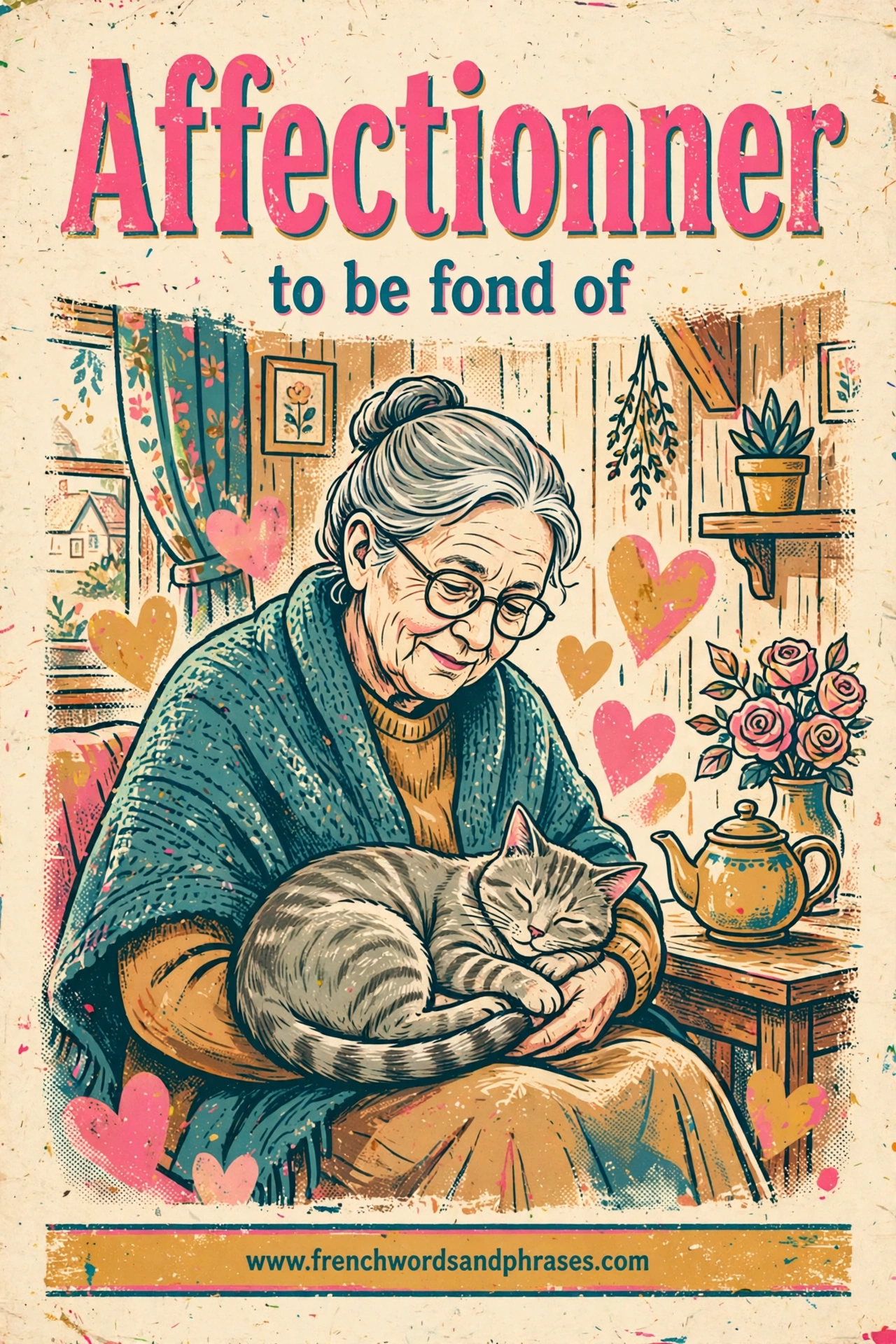
Affectionner means to be fond of — to hold a person, a place or a pleasure in warm, lasting affection.
A grandfather and his morning walk by the river, a cook and her oldest copper pan, a reader and one battered novel — affectionner is the verb of quiet fondness: not a passion that burns, but an affection that stays.
In this guide, you’ll learn how to conjugate affectionner in all the major French tenses and moods. Explore complete conjugation tables, French examples, English translations, and practice quizzes.
Understanding the French Verb Affectionner
Affectionner is a regular French verb belonging to the first group of verbs, those ending in-er.
It means to be fond of. It is a gentle, slightly literary verb — warmer and more deliberate than aimer for things and habits, softer than adorer. People affectionnent places, dishes, authors, walks and wines: lasting tastes rather than passing fancies, the fondness of a whole lifetime.
Verb classification: First group (-er)
Auxiliary verb: Avoir
Past participle: affectionné
Present participle: affectionnant
English equivalents: To be fond of, to hold dear; affectionner les vieux livres — to be fond of old books; affectionner particulièrement — to be particularly fond of; un lieu qu’elle affectionne — a place she is fond of; affectionner la solitude — to be fond of solitude.
One important detail: affectionner takes a direct object — you affectionnez something or someone, with no preposition: elle affectionne les vieux livres, il affectionne ce quartier. The double n is part of the word’s skeleton, from affection, and the verb is regular: j’affectionne, nous affectionnons, ils affectionnent. It often travels with particulièrement: affectionner particulièrement un auteur, to be especially fond of an author.
Experience the Word
Affectionner is the verb of the lasting taste — the book reread ten times, the café that has kept your table for twenty years.
Imagine an old bookseller in Lyon. Of his thousands of books, one shelf is not for sale: les livres qu’il affectionne, the battered volumes he has loved since he was twenty and will not part with at any price.
He does not merely like them. He is fond of them — il les affectionne, with forty years of affection behind the word.
How to Conjugate Affectionner: Complete French Conjugation Guide
Let’s explore every major conjugation of affectionner, beginning with the indicative mood.
How to Conjugate Affectionner in the Indicative Mood
The indicative mood is used to express facts, observations, actions, and events.
How to Conjugate Affectionner in the Present Tense (Présent)
Used for actions happening now, habitual actions, and general truths.
| Subject | Conjugation |
|---|---|
| je | affectionne |
| tu | affectionnes |
| il / elle | affectionne |
| nous | affectionnons |
| vous | affectionnez |
| ils / elles | affectionnent |
Example
Elle affectionne particulièrement les vieux livres.
She is particularly fond of old books.
Quick Quiz 1
Complete the sentence:
Nous ______ les promenades du matin.
Reveal the answer
affectionnons
Nous affectionnons les promenades du matin.
We are fond of morning walks.
How to Conjugate Affectionner in the Passé Composé
Used for completed actions in the past. Affectionner takes the auxiliary verb avoir.
| Subject | Conjugation |
|---|---|
| j’ | ai affectionné |
| tu | as affectionné |
| il / elle | a affectionné |
| nous | avons affectionné |
| vous | avez affectionné |
| ils / elles | ont affectionné |
Example
Il a toujours affectionné la musique de chambre.
He has always been fond of chamber music.
How to Conjugate Affectionner in the Imparfait (Imperfect Tense)
Used for habitual past actions, descriptions, and ongoing situations in the past.
| Subject | Conjugation |
|---|---|
| je | affectionnais |
| tu | affectionnais |
| il / elle | affectionnait |
| nous | affectionnions |
| vous | affectionniez |
| ils / elles | affectionnaient |
Example
Mon grand-père affectionnait les promenades du matin.
My grandfather was fond of morning walks.
Quick Quiz 2
Choose the correct form:
He has always been fond of chamber music.
Il ______ toujours la musique de chambre. (a affectionné / est affectionné)
Reveal the answer
a affectionné
Il a toujours affectionné la musique de chambre.
Affectionner takes avoir.
How to Conjugate Affectionner in the Plus-que-parfait
Used to describe an action that had already been completed before another past event.
| Subject | Conjugation |
|---|---|
| j’ | avais affectionné |
| tu | avais affectionné |
| il / elle | avait affectionné |
| nous | avions affectionné |
| vous | aviez affectionné |
| ils / elles | avaient affectionné |
Example
Elle avait affectionné ce quartier dès son arrivée.
She had been fond of this neighbourhood from the day she arrived.
How to Conjugate Affectionner in the Passé Simple
Primarily used in formal writing, literature, and historical narratives. It is rarely used in everyday conversation.
| Subject | Conjugation |
|---|---|
| je | affectionnai |
| tu | affectionnas |
| il / elle | affectionna |
| nous | affectionnâmes |
| vous | affectionnâtes |
| ils / elles | affectionnèrent |
Example
Le roi affectionna ce jardin toute sa vie.
The king was fond of this garden all his life.
How to Conjugate Affectionner in the Passé Antérieur
A literary tense used to express an action completed immediately before another past action, generally in the passé simple.
| Subject | Conjugation |
|---|---|
| j’ | eus affectionné |
| tu | eus affectionné |
| il / elle | eut affectionné |
| nous | eûmes affectionné |
| vous | eûtes affectionné |
| ils / elles | eurent affectionné |
Example
Dès qu’il eut affectionné ce café, il y prit ses habitudes.
As soon as he had grown fond of this café, he became a regular there.
How to Conjugate Affectionner in the Future Tense (Futur Simple)
Used to describe actions that will take place in the future.
| Subject | Conjugation |
|---|---|
| je | affectionnerai |
| tu | affectionneras |
| il / elle | affectionnera |
| nous | affectionnerons |
| vous | affectionnerez |
| ils / elles | affectionneront |
Example
Tu affectionneras ce village, tu verras.
You will grow fond of this village, you will see.
How to Conjugate Affectionner in the Futur Antérieur (Future Perfect)
Used for an action that will have been completed before a particular point in the future.
| Subject | Conjugation |
|---|---|
| j’ | aurai affectionné |
| tu | auras affectionné |
| il / elle | aura affectionné |
| nous | aurons affectionné |
| vous | aurez affectionné |
| ils / elles | auront affectionné |
Example
À la fin du séjour, vous aurez affectionné cette maison.
By the end of the stay, you will have grown fond of this house.
How to Conjugate Affectionner in the Near Future (Futur Proche)
Used to describe something that is going to happen soon. Formed with aller + infinitive.
| Subject | Conjugation |
|---|---|
| je | vais affectionner |
| tu | vas affectionner |
| il / elle | va affectionner |
| nous | allons affectionner |
| vous | allez affectionner |
| ils / elles | vont affectionner |
Example
Je vais affectionner ce petit restaurant, je le sens.
I am going to be fond of this little restaurant, I can feel it.
How to Conjugate Affectionner in the Conditional Mood
The conditional mood expresses what would happen under certain circumstances. It is also frequently used to make polite requests or express wishes.
How to Conjugate Affectionner in the Present Conditional
| Subject | Conjugation |
|---|---|
| je | affectionnerais |
| tu | affectionnerais |
| il / elle | affectionnerait |
| nous | affectionnerions |
| vous | affectionneriez |
| ils / elles | affectionneraient |
Example
Il affectionnerait les romans policiers s’il avait le temps de lire.
He would be fond of detective novels if he had time to read.
How to Conjugate Affectionner in the Past Conditional
| Subject | Conjugation |
|---|---|
| j’ | aurais affectionné |
| tu | aurais affectionné |
| il / elle | aurait affectionné |
| nous | aurions affectionné |
| vous | auriez affectionné |
| ils / elles | auraient affectionné |
Example
Elle aurait affectionné ce métier dans d’autres circonstances.
She would have been fond of this trade in other circumstances.
Affectionner in the Literary Past Conditional Form
This less common literary form uses the imperfect subjunctive of avoir.
| Subject | Conjugation |
|---|---|
| j’ | eusse affectionné |
| tu | eusses affectionné |
| il / elle | eût affectionné |
| nous | eussions affectionné |
| vous | eussiez affectionné |
| ils / elles | eussent affectionné |
Example
Il eût affectionné la solitude sans sa famille.
He would have been fond of solitude without his family.
How to Conjugate Affectionner in the Subjunctive Mood
The subjunctive is used to express wishes, emotions, doubts, necessity, and uncertainty. It frequently follows expressions such as il faut que (it is necessary that) or bien que (although).
How to Conjugate Affectionner in the Present Subjunctive
| Subject | Conjugation |
|---|---|
| que je | affectionne |
| que tu | affectionnes |
| qu’il / qu’elle | affectionne |
| que nous | affectionnions |
| que vous | affectionniez |
| qu’ils / qu’elles | affectionnent |
Example
Il est étonnant qu’il affectionne ce vin doux.
It is surprising that he is fond of this sweet wine.
Quick Quiz 3
Complete the sentence using the subjunctive:
Il est rare que vous ______ autant un seul auteur.
Reveal the answer
affectionniez
Il est rare que vous affectionniez autant un seul auteur.
It is rare for you to be so fond of a single author.
How to Conjugate Affectionner in the Imperfect Subjunctive
A literary tense, rarely encountered in modern spoken French.
| Subject | Conjugation |
|---|---|
| que je | affectionnasse |
| que tu | affectionnasses |
| qu’il / qu’elle | affectionnât |
| que nous | affectionnassions |
| que vous | affectionnassiez |
| qu’ils / qu’elles | affectionnassent |
Example
On ne pensait pas qu’elle affectionnât les sports d’hiver.
Nobody thought she was fond of winter sports.
How to Conjugate Affectionner in the Pluperfect Subjunctive
A literary construction used to express an action completed before another past action.
| Subject | Conjugation |
|---|---|
| que j’ | eusse affectionné |
| que tu | eusses affectionné |
| qu’il / qu’elle | eût affectionné |
| que nous | eussions affectionné |
| que vous | eussiez affectionné |
| qu’ils / qu’elles | eussent affectionné |
Example
On disait qu’il eût affectionné les chevaux dès l’enfance.
It was said he had been fond of horses since childhood.
How to Conjugate Affectionner in the Past Subjunctive
| Subject | Conjugation |
|---|---|
| que j’ | aie affectionné |
| que tu | aies affectionné |
| qu’il / qu’elle | ait affectionné |
| que nous | ayons affectionné |
| que vous | ayez affectionné |
| qu’ils / qu’elles | aient affectionné |
Example
Je suis heureux qu’elle ait affectionné notre maison.
I am glad she grew fond of our house.
How to Conjugate Affectionner in the Imperative
The imperative is used to give commands, instructions, invitations, or suggestions. Subject pronouns are omitted.
How to Conjugate Affectionner in the Present Imperative
| Person | Conjugation |
|---|---|
| (tu) | affectionne |
| (nous) | affectionnons |
| (vous) | affectionnez |
Example
Affectionne ce que tu fais, le reste suivra !
Be fond of what you do, the rest will follow!
Quick Quiz 4
How would you say Be fond of what you do (tu form)?
Reveal the answer
Affectionne ce que tu fais !
French Participles of Affectionner
Participles are verb forms that can be used in compound tenses and other grammatical constructions.
Present Participle of Affectionner
affectionnant
En affectionnant les vieilles pierres, il est devenu architecte.
By being fond of old stones, he became an architect.
Past Participle of Affectionner
affectionné
Affectionné de ses élèves, le vieux professeur souriait.
Held dear by his pupils, the old teacher smiled.
Affectionner in Everyday French: Real-Life Examples
Now that you know the conjugations, let’s see how affectionner appears in everyday French.
Example 1 — Present
Elle affectionne les vieux livres.
She is fond of old books.
Example 2 — Passé composé
Il a toujours affectionné la musique de chambre.
He has always been fond of chamber music.
Example 3 — Imparfait
Mon grand-père affectionnait les promenades du matin.
My grandfather was fond of morning walks.
Example 4 — Future
Tu affectionneras ce village, tu verras.
You will grow fond of this village, you will see.
Example 5 — Conditional
Il affectionnerait les romans policiers s’il lisait davantage.
He would be fond of detective novels if he read more.
Example 6 — Imperative
Affectionne ce que tu fais !
Be fond of what you do!
Beyond Translation: The Meaning of Affectionner
English to be fond of needs four words; French affectionner does it in one, and carries affection inside it for everyone to see.
It is the fondness of habits, not of moments.
On aime a person, on adore a singer, but on affectionne a walk, a wine, a quarter of Paris — the tastes that quietly organise a life.
How to Remember the French Verb Affectionner
Remember it this way: Affectionner is about the bookseller’s shelf that is not for sale.
- Direct object, no preposition: elle affectionne les vieux livres.
- It often travels with particulièrement: affectionner particulièrement un auteur.
- Regular -er with avoir, double n throughout: j’affectionne, nous affectionnons, affectionné.
The key idea is the bookseller’s shelf that is not for sale.
Test Your Knowledge of Affectionner
Let’s see how much you’ve learned. Try answering these questions before revealing the answers.
Question 1
Does affectionner need a preposition before its object?
Reveal the answer
No — it takes a direct object: il affectionne ce quartier, elle affectionne les vieux livres.
Question 2
How do you say She is particularly fond of old books in French?
Reveal the answer
Elle affectionne particulièrement les vieux livres.
Question 3
Translate: My grandfather was fond of morning walks.
Reveal the answer
Mon grand-père affectionnait les promenades du matin.
Question 4
What is the past participle of affectionner?
Reveal the answer
Affectionné.
Question 5
Complete the sentence:
Il est étonnant qu’il ______ ce vin doux.
Reveal the answer
affectionne
Il est étonnant qu’il affectionne ce vin doux.
It is surprising that he is fond of this sweet wine.
Your Final Challenge
Can You Use It?
How would you say this in French?
She is fond of this morning café, her table by the window and the soft clink of cups.
Reveal the answer
Elle affectionne ce café du matin, sa table près de la fenêtre et le bruit doux des tasses.
She is fond of this morning café, her table by the window and the soft clink of cups.
A little French. A little curiosity. A richer everyday life.
LEARN FRENCH ONE WORD AT A TIME