A French Word to Live By
How to Conjugate Aborder in French
/a.bɔʁ.de/
Aborder means to approach — to come alongside a ship, to go up to a person, or to tackle a question for the first time.
A boat drawing alongside a quay, a stranger gathering courage to speak, a class opening a difficult chapter — aborder is the verb of the approach: the moment of coming up to something, by water, on foot or in thought.
In this guide, you’ll learn how to conjugate aborder in all the major French tenses and moods. Explore complete conjugation tables, French examples, English translations, and practice quizzes.
Understanding the French Verb Aborder
Aborder is a regular French verb belonging to the first group of verbs, those ending in-er.
It means to approach. It is commonly used in three waters: literally, of boats reaching a shore or another vessel; socially, of approaching a stranger, a colleague, a delicate person; and intellectually, of tackling a subject, a problem or a new chapter — aborder la question is the standard French for ‘to address the question’.
Verb classification: First group (-er)
Auxiliary verb: Avoir
Past participle: abordé
Present participle: abordant
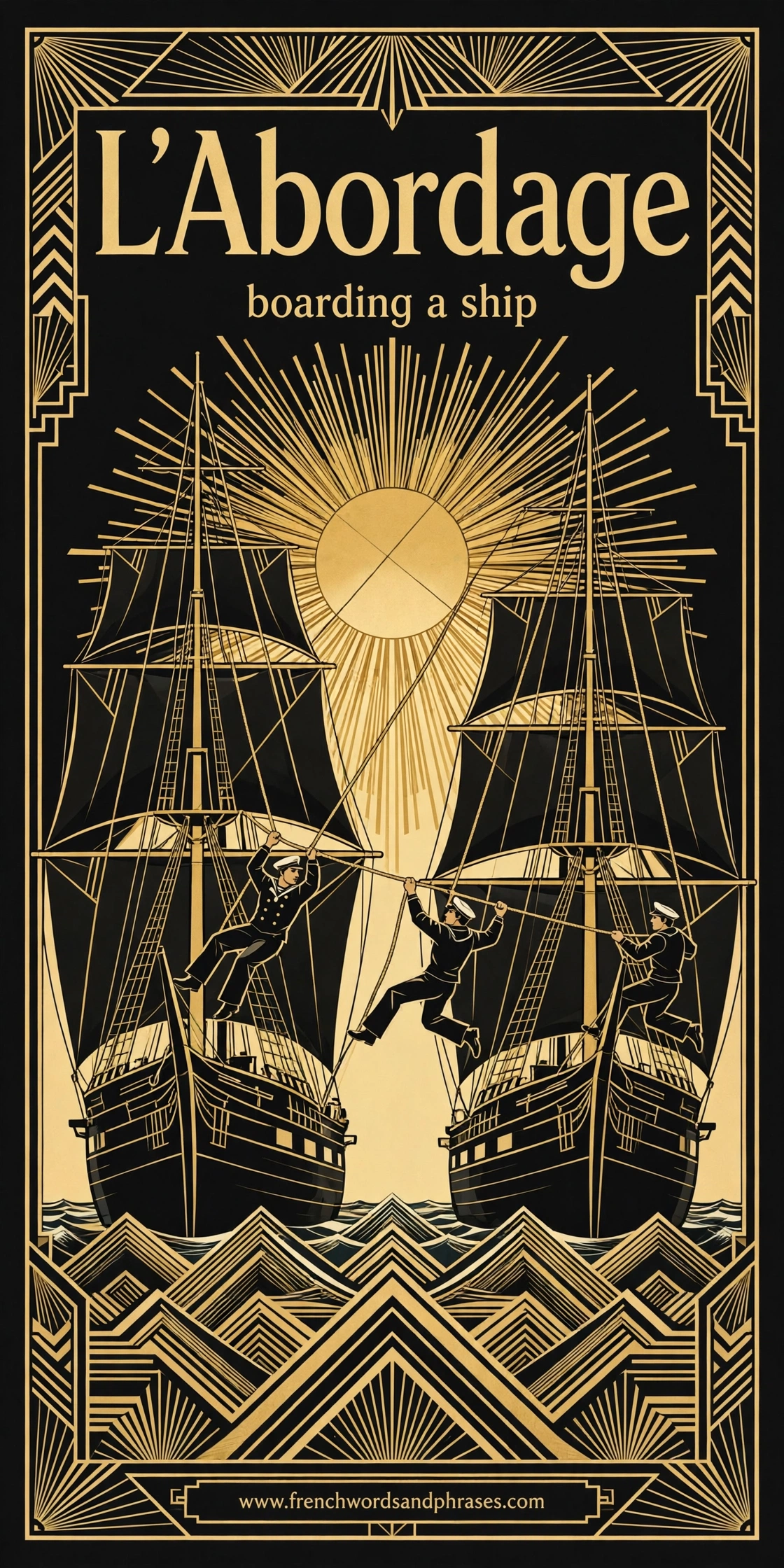
English equivalents: To approach, to board, to tackle; aborder un navire — to board a ship; aborder quelqu’un — to approach someone, to accost someone; aborder un sujet — to broach a subject; aborder un problème — to tackle a problem; l’abordage — boarding.
One important detail: aborder began at sea — le bord is the side of a ship, and aborder is to come bord à bord, side to side. From the quay it walked into conversation: aborder quelqu’un is to go up to a person and speak first, and aborder un sujet is to broach a subject — to come alongside it and begin. The verb is a regular -er throughout; only its courage varies.
Experience the Word
Aborder is the verb of the first move — the approach by boat, by foot or by sentence, when distance becomes contact.
Imagine a shy student in a Paris café who has rehearsed one sentence for ten minutes. The writer at the next table looks up, smiles — elle l’aborde, she goes up to him, and the conversation of her life begins with a borrowed pen.
She has not interrupted or intruded. She has approached — elle a abordé — the way a boat comes gently alongside.
How to Conjugate Aborder: Complete French Conjugation Guide
Let’s explore every major conjugation of aborder, beginning with the indicative mood.
How to Conjugate Aborder in the Indicative Mood
The indicative mood is used to express facts, observations, actions, and events.
How to Conjugate Aborder in the Present Tense (Présent)
Used for actions happening now, habitual actions, and general truths.
| Subject | Conjugation |
|---|---|
| je | aborde |
| tu | abordes |
| il / elle | aborde |
| nous | abordons |
| vous | abordez |
| ils / elles | abordent |
Example
Le bateau aborde le quai à l’aube.
The boat comes alongside the quay at dawn.
Quick Quiz 1
Complete the sentence:
Nous ______ le quai lentement.
Reveal the answer
abordons
Nous abordons le quai lentement.
We come alongside the quay slowly.
How to Conjugate Aborder in the Passé Composé
Used for completed actions in the past. Aborder takes the auxiliary verb avoir.
| Subject | Conjugation |
|---|---|
| j’ | ai abordé |
| tu | as abordé |
| il / elle | a abordé |
| nous | avons abordé |
| vous | avez abordé |
| ils / elles | ont abordé |
Example
Elle a abordé le sujet avec beaucoup de tact.
She broached the subject with great tact.
How to Conjugate Aborder in the Imparfait (Imperfect Tense)
Used for habitual past actions, descriptions, and ongoing situations in the past.
| Subject | Conjugation |
|---|---|
| je | abordais |
| tu | abordais |
| il / elle | abordait |
| nous | abordions |
| vous | abordiez |
| ils / elles | abordaient |
Example
Les marins abordaient l’île par le nord.
The sailors used to approach the island from the north.
Quick Quiz 2
Choose the correct form:
He tackled the question at the first meeting.
Il ______ la question dès la première réunion. (a abordé / est abordé)
Reveal the answer
a abordé
Il a abordé la question dès la première réunion.
Aborder takes avoir.
How to Conjugate Aborder in the Plus-que-parfait
Used to describe an action that had already been completed before another past event.
| Subject | Conjugation |
|---|---|
| j’ | avais abordé |
| tu | avais abordé |
| il / elle | avait abordé |
| nous | avions abordé |
| vous | aviez abordé |
| ils / elles | avaient abordé |
Example
Il avait abordé la question dès la première réunion.
He had tackled the question at the very first meeting.
How to Conjugate Aborder in the Passé Simple
Primarily used in formal writing, literature, and historical narratives. It is rarely used in everyday conversation.
| Subject | Conjugation |
|---|---|
| je | abordai |
| tu | abordas |
| il / elle | aborda |
| nous | abordâmes |
| vous | abordâtes |
| ils / elles | abordèrent |
Example
Le navire aborda le port au coucher du soleil.
The ship approached the harbour at sunset.
How to Conjugate Aborder in the Passé Antérieur
A literary tense used to express an action completed immediately before another past action, generally in the passé simple.
| Subject | Conjugation |
|---|---|
| j’ | eus abordé |
| tu | eus abordé |
| il / elle | eut abordé |
| nous | eûmes abordé |
| vous | eûtes abordé |
| ils / elles | eurent abordé |
Example
Quand elle eut abordé le problème, tout le monde écouta.
When she had tackled the problem, everyone listened.
How to Conjugate Aborder in the Future Tense (Futur Simple)
Used to describe actions that will take place in the future.
| Subject | Conjugation |
|---|---|
| je | aborderai |
| tu | aborderas |
| il / elle | abordera |
| nous | aborderons |
| vous | aborderez |
| ils / elles | aborderont |
Example
Nous aborderons ce chapitre demain matin.
We will tackle this chapter tomorrow morning.
How to Conjugate Aborder in the Futur Antérieur (Future Perfect)
Used for an action that will have been completed before a particular point in the future.
| Subject | Conjugation |
|---|---|
| j’ | aurai abordé |
| tu | auras abordé |
| il / elle | aura abordé |
| nous | aurons abordé |
| vous | aurez abordé |
| ils / elles | auront abordé |
Example
À la fin du cours, vous aurez abordé tous les points difficiles.
By the end of the lesson, you will have tackled all the difficult points.
How to Conjugate Aborder in the Near Future (Futur Proche)
Used to describe something that is going to happen soon. Formed with aller + infinitive.
| Subject | Conjugation |
|---|---|
| je | vais aborder |
| tu | vas aborder |
| il / elle | va aborder |
| nous | allons aborder |
| vous | allez aborder |
| ils / elles | vont aborder |
Example
Le professeur va aborder une question délicate.
The teacher is going to broach a delicate question.
How to Conjugate Aborder in the Conditional Mood
The conditional mood expresses what would happen under certain circumstances. It is also frequently used to make polite requests or express wishes.
How to Conjugate Aborder in the Present Conditional
| Subject | Conjugation |
|---|---|
| je | aborderais |
| tu | aborderais |
| il / elle | aborderait |
| nous | aborderions |
| vous | aborderiez |
| ils / elles | aborderaient |
Example
J’aborderais le directeur si j’osais.
I would approach the director if I dared.
How to Conjugate Aborder in the Past Conditional
| Subject | Conjugation |
|---|---|
| j’ | aurais abordé |
| tu | aurais abordé |
| il / elle | aurait abordé |
| nous | aurions abordé |
| vous | auriez abordé |
| ils / elles | auraient abordé |
Example
Elle aurait abordé le sujet plus tôt sans la présence des enfants.
She would have broached the subject earlier if the children had not been there.
Aborder in the Literary Past Conditional Form
This less common literary form uses the imperfect subjunctive of avoir.
| Subject | Conjugation |
|---|---|
| j’ | eusse abordé |
| tu | eusses abordé |
| il / elle | eût abordé |
| nous | eussions abordé |
| vous | eussiez abordé |
| ils / elles | eussent abordé |
Example
Il eût abordé l’inconnu sans l’intervention de son ami.
He would have approached the stranger without his friend’s intervention.
How to Conjugate Aborder in the Subjunctive Mood
The subjunctive is used to express wishes, emotions, doubts, necessity, and uncertainty. It frequently follows expressions such as il faut que (it is necessary that) or bien que (although).
How to Conjugate Aborder in the Present Subjunctive
| Subject | Conjugation |
|---|---|
| que je | aborde |
| que tu | abordes |
| qu’il / qu’elle | aborde |
| que nous | abordions |
| que vous | abordiez |
| qu’ils / qu’elles | abordent |
Example
Il faut que tu abordes ce problème de front.
You must tackle this problem head-on.
Quick Quiz 3
Complete the sentence using the subjunctive:
Elle craint que vous ______ le sujet interdit.
Reveal the answer
abordiez
Elle craint que vous abordiez le sujet interdit.
She fears you may broach the forbidden subject.
How to Conjugate Aborder in the Imperfect Subjunctive
A literary tense, rarely encountered in modern spoken French.
| Subject | Conjugation |
|---|---|
| que je | abordasse |
| que tu | abordasses |
| qu’il / qu’elle | abordât |
| que nous | abordassions |
| que vous | abordassiez |
| qu’ils / qu’elles | abordassent |
Example
Elle craignait qu’il abordât le sujet interdit.
She feared he might broach the forbidden subject.
How to Conjugate Aborder in the Pluperfect Subjunctive
A literary construction used to express an action completed before another past action.
| Subject | Conjugation |
|---|---|
| que j’ | eusse abordé |
| que tu | eusses abordé |
| qu’il / qu’elle | eût abordé |
| que nous | eussions abordé |
| que vous | eussiez abordé |
| qu’ils / qu’elles | eussent abordé |
Example
On racontait qu’elle eût abordé le pirate en pleine mer.
People said she had boarded the pirate in the open sea.
How to Conjugate Aborder in the Past Subjunctive
| Subject | Conjugation |
|---|---|
| que j’ | aie abordé |
| que tu | aies abordé |
| qu’il / qu’elle | ait abordé |
| que nous | ayons abordé |
| que vous | ayez abordé |
| qu’ils / qu’elles | aient abordé |
Example
Je suis ravi qu’elle ait abordé la question.
I am delighted she tackled the question.
How to Conjugate Aborder in the Imperative
The imperative is used to give commands, instructions, invitations, or suggestions. Subject pronouns are omitted.
How to Conjugate Aborder in the Present Imperative
| Person | Conjugation |
|---|---|
| (tu) | aborde |
| (nous) | abordons |
| (vous) | abordez |
Example
Aborde le sujet doucement, sans le brusquer !
Broach the subject gently, without startling him!
Quick Quiz 4
How would you say Tackle the problem head-on (tu form)?
Reveal the answer
Aborde le problème de front !
French Participles of Aborder
Participles are verb forms that can be used in compound tenses and other grammatical constructions.
Present Participle of Aborder
abordant
En abordant le quai, le bateau ralentit.
As it comes alongside the quay, the boat slows down.
Past Participle of Aborder
abordé
Abordé par un inconnu, il répondit poliment.
Approached by a stranger, he answered politely.
Aborder in Everyday French: Real-Life Examples
Now that you know the conjugations, let’s see how aborder appears in everyday French.
Example 1 — Present
Le bateau aborde le quai.
The boat comes alongside the quay.
Example 2 — Passé composé
Elle a abordé le sujet avec tact.
She broached the subject tactfully.
Example 3 — Imparfait
Les marins abordaient l’île par le nord.
The sailors used to approach the island from the north.
Example 4 — Future
Nous aborderons ce chapitre demain.
We will tackle this chapter tomorrow.
Example 5 — Conditional
J’aborderais le directeur si j’osais.
I would approach the director if I dared.
Example 6 — Imperative
Abordez le problème de front !
Tackle the problem head-on!
Beyond Translation: The Meaning of Aborder
English board a ship and French aborder share the same plank — le bord, the ship’s side.
Every approach is a small boarding.
That is the poetry of the verb: to speak to a stranger, to open a hard chapter, is to bring your vessel alongside another and step across. French even keeps the battle version — l’abordage is the boarding of an enemy ship, grappling hooks and all.
How to Remember the French Verb Aborder
Remember it this way: Aborder is about the boat coming alongside — every approach is a small boarding.
- From le bord, the ship’s side: aborder is to come alongside — a boat, a person, a subject.
- Three waters: aborder un navire, aborder quelqu’un, aborder un sujet.
- Regular -er with avoir: j’aborde, nous abordons, past participle abordé.
The key idea is the boat coming alongside — every approach is a small boarding.
Test Your Knowledge of Aborder
Let’s see how much you’ve learned. Try answering these questions before revealing the answers.
Question 1
What are the three classic objects of aborder?
Reveal the answer
A ship, a person and a subject — aborder un navire, aborder quelqu’un, aborder un sujet.
Question 2
How do you say She broached the subject with great tact in French?
Reveal the answer
Elle a abordé le sujet avec beaucoup de tact.
Question 3
Translate: We will tackle this chapter tomorrow.
Reveal the answer
Nous aborderons ce chapitre demain.
Question 4
What is the past participle of aborder?
Reveal the answer
Abordé.
Question 5
Complete the sentence:
Il faut que tu ______ ce problème de front.
Reveal the answer
abordes
Il faut que tu abordes ce problème de front.
You must tackle this problem head-on.
Your Final Challenge
Can You Use It?
How would you say this in French?
She broached the subject with tact, and the meeting ended well.
Reveal the answer
Elle a abordé le sujet avec tact, et la réunion s’est bien terminée.
She broached the subject with tact, and the meeting ended well.
A little French. A little curiosity. A richer everyday life.
LEARN FRENCH ONE WORD AT A TIME