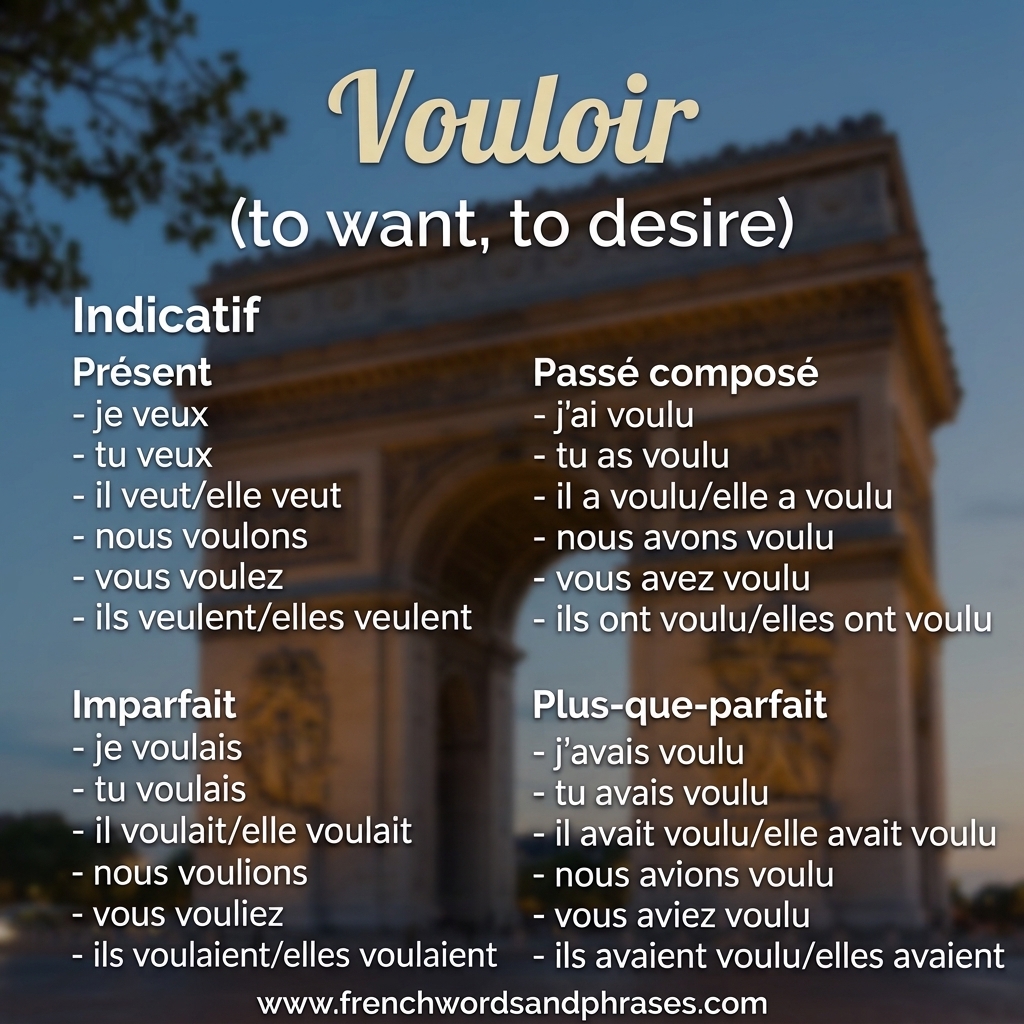
A French Word to Live By
How to Conjugate Vivre in French
Pronunciation: /vivʁ/
Vivre means “to live.” It is one of the most important French verbs, used to talk about life, experiences, relationships, and the way we live each day.
From je vis (I live) to nous avons vécu (we lived), this versatile verb helps express what it means to be alive and to experience the world. Let’s explore how to conjugate vivre in every major tense and mood.
Understanding the French Verb Vivre
Before exploring the conjugations, here are the essential facts about this verb.
- Infinitive: vivre
- English meaning: to live
- Verb group: Third group (irregular -re verb)
- Auxiliary verb: avoir
- Past participle: vécu
- Present participle: vivant
Vivre is irregular, so its forms must be learned rather than predicted from a regular conjugation pattern. Its present tense uses the stem viv-, while several other tenses use the stem vécu- or forms built from vivr-.
Experience the Word
The verb vivre appears in countless everyday situations. You can use it to describe where and how you live, the experiences you have had, and the life you hope to lead.
Je vis en France.
I live in France.
Nous vivons une belle aventure.
We are living a wonderful adventure.
Elle a vécu à Paris pendant dix ans.
She lived in Paris for ten years.
Il faut vivre pleinement.
You have to live life to the fullest.
How to Conjugate Vivre in French
French verbs change their endings depending on the subject, tense, and mood. The following tables provide a complete guide to the major conjugations of vivre.
Indicatif (Indicative Mood)
The indicative mood is used to express facts, actions, and events that are presented as real or certain.
Présent (Present)
Use the present tense to describe what someone lives, experiences, or does now.
| Conjugation | Subject |
|---|---|
| je vis | I live |
| tu vis | you live |
| il vit / elle vit | he lives / she lives |
| nous vivons | we live |
| vous vivez | you live |
| ils vivent / elles vivent | they live |
Passé composé (Past Completed)
The passé composé describes a completed action or experience in the past. It is formed with the present tense of avoir and the past participle vécu.
| Conjugation | Subject |
|---|---|
| j’ai vécu | I lived / I have lived |
| tu as vécu | you lived / you have lived |
| il a vécu / elle a vécu | he lived / she lived |
| nous avons vécu | we lived / we have lived |
| vous avez vécu | you lived / you have lived |
| ils ont vécu / elles ont vécu | they lived / they have lived |
Imparfait (Imperfect)
The imparfait describes ongoing or habitual actions in the past. It is often used to talk about how life used to be.
| Conjugation | Subject |
|---|---|
| je vivais | I was living / I used to live |
| tu vivais | you were living / you used to live |
| il vivait / elle vivait | he was living / she was living |
| nous vivions | we were living / we used to live |
| vous viviez | you were living / you used to live |
| ils vivaient / elles vivaient | they were living / they used to live |
Plus-que-parfait (Pluperfect)
The plus-que-parfait describes an action that had already happened before another event in the past.
| Conjugation | Subject |
|---|---|
| j’avais vécu | I had lived |
| tu avais vécu | you had lived |
| il avait vécu / elle avait vécu | he had lived / she had lived |
| nous avions vécu | we had lived |
| vous aviez vécu | you had lived |
| ils avaient vécu / elles avaient vécu | they had lived |
Passé simple (Simple Past)
The passé simple is primarily used in literature, historical writing, and formal storytelling. In everyday conversation, the passé composé is generally preferred.
| Conjugation | Subject |
|---|---|
| je vécus | I lived |
| tu vécus | you lived |
| il vécut / elle vécut | he lived / she lived |
| nous vécûmes | we lived |
| vous vécûtes | you lived |
| ils vécurent / elles vécurent | they lived |
Passé antérieur (Past Anterior)
The passé antérieur is a literary tense used to describe an action completed immediately before another past action, usually alongside the passé simple.
| Conjugation | Subject |
|---|---|
| j’eus vécu | I had lived |
| tu eus vécu | you had lived |
| il eut vécu / elle eut vécu | he had lived / she had lived |
| nous eûmes vécu | we had lived |
| vous eûtes vécu | you had lived |
| ils eurent vécu / elles eurent vécu | they had lived |
Futur (Future)
The simple future describes what someone will do or what life will be like in the future.
| Conjugation | Subject |
|---|---|
| je vivrai | I will live |
| tu vivras | you will live |
| il vivra / elle vivra | he will live / she will live |
| nous vivrons | we will live |
| vous vivrez | you will live |
| ils vivront / elles vivront | they will live |
Futur antérieur (Future Perfect)
The futur antérieur describes something that will have been completed by a particular point in the future.
| Conjugation | Subject |
|---|---|
| j’aurai vécu | I will have lived |
| tu auras vécu | you will have lived |
| il aura vécu / elle aura vécu | he will have lived / she will have lived |
| nous aurons vécu | we will have lived |
| vous aurez vécu | you will have lived |
| ils auront vécu / elles auront vécu | they will have lived |
Futur proche (Near Future)
The futur proche describes something that is going to happen soon. It is formed with aller in the present tense followed by vivre.
| Conjugation | Subject |
|---|---|
| je vais vivre | I am going to live |
| tu vas vivre | you are going to live |
| il va vivre / elle va vivre | he is going to live / she is going to live |
| nous allons vivre | we are going to live |
| vous allez vivre | you are going to live |
| ils vont vivre / elles vont vivre | they are going to live |
Conditionnel (Conditional Mood)
The conditional mood expresses what would happen under certain circumstances. It is also used to make polite statements and express wishes.
Présent (Present Conditional)
| Conjugation | Subject |
|---|---|
| je vivrais | I would live |
| tu vivrais | you would live |
| il vivrait / elle vivrait | he would live / she would live |
| nous vivrions | we would live |
| vous vivriez | you would live |
| ils vivraient / elles vivraient | they would live |
Passé (Past Conditional)
The past conditional describes something that would have happened but did not.
| Conjugation | Subject |
|---|---|
| j’aurais vécu | I would have lived |
| tu aurais vécu | you would have lived |
| il aurait vécu / elle aurait vécu | he would have lived / she would have lived |
| nous aurions vécu | we would have lived |
| vous auriez vécu | you would have lived |
| ils auraient vécu / elles auraient vécu | they would have lived |
Passé – Forme alternative (Alternative Past Conditional)
This literary form is uncommon in modern French. It is sometimes encountered in formal writing and older literature.
| Conjugation | Subject |
|---|---|
| j’eusse vécu | I would have lived |
| tu eusses vécu | you would have lived |
| il eût vécu / elle eût vécu | he would have lived / she would have lived |
| nous eussions vécu | we would have lived |
| vous eussiez vécu | you would have lived |
| ils eussent vécu / elles eussent vécu | they would have lived |
Subjonctif (Subjunctive Mood)
The subjunctive is used after certain expressions of emotion, doubt, necessity, desire, and uncertainty. It often appears in a dependent clause introduced by que.
Présent (Present Subjunctive)
| Conjugation | Subject |
|---|---|
| que je vive | that I live |
| que tu vives | that you live |
| qu’il vive / qu’elle vive | that he lives / that she lives |
| que nous vivions | that we live |
| que vous viviez | that you live |
| qu’ils vivent / qu’elles vivent | that they live |
Imparfait (Imperfect Subjunctive)
The imperfect subjunctive is a literary tense rarely used in modern spoken French. You may encounter it in classic novels and formal writing.
| Conjugation | Subject |
|---|---|
| que je vécusse | that I lived |
| que tu vécusses | that you lived |
| qu’il vécût / qu’elle vécût | that he lived / that she lived |
| que nous vécussions | that we lived |
| que vous vécussiez | that you lived |
| qu’ils vécussent / qu’elles vécussent | that they lived |
Plus-que-parfait (Pluperfect Subjunctive)
This literary form expresses an action that had been completed before another past action in a subjunctive context.
| Conjugation | Subject |
|---|---|
| que j’eusse vécu | that I had lived |
| que tu eusses vécu | that you had lived |
| qu’il eût vécu / qu’elle eût vécu | that he had lived / that she had lived |
| que nous eussions vécu | that we had lived |
| que vous eussiez vécu | that you had lived |
| qu’ils eussent vécu / qu’elles eussent vécu | that they had lived |
Passé (Past Subjunctive)
The past subjunctive describes an action that has already been completed in a dependent clause.
| Conjugation | Subject |
|---|---|
| que j’aie vécu | that I have lived |
| que tu aies vécu | that you have lived |
| qu’il ait vécu / qu’elle ait vécu | that he has lived / that she has lived |
| que nous ayons vécu | that we have lived |
| que vous ayez vécu | that you have lived |
| qu’ils aient vécu / qu’elles aient vécu | that they have lived |
Impératif (Imperative Mood)
The imperative is used to give commands, make suggestions, or offer encouragement. It is used with tu, nous, and vous, but the subject pronoun is omitted.
Présent (Present Imperative)
| Conjugation | Meaning |
|---|---|
| vis | Live! (informal singular) |
| vivons | Let’s live! |
| vivez | Live! (formal or plural) |
For example, Vis pleinement ! means “Live life to the fullest!”
Participe (Participles)
Participles are used to form compound tenses and can also function as adjectives or describe actions.
Présent (Present Participle)
| Conjugation | Meaning |
|---|---|
| vivant | living |
Passé (Past Participle)
| Conjugation | Meaning |
|---|---|
| vécu | lived (masculine singular) |
| vécus | lived (masculine plural) |
| vécue | lived (feminine singular) |
| vécues | lived (feminine plural) |
Because vivre takes avoir as its auxiliary verb, the past participle normally remains unchanged. It agrees with a preceding direct object when the rules of French past participle agreement require it.
Vivre in Everyday French
Vivre is much more than a verb describing where someone resides. It can express experiences, emotions, relationships, and the way people approach life.
Talking About Where You Live
Je vis à Montréal.
I live in Montreal.
Nous vivons près de la mer.
We live near the sea.
Talking About Experiences
J’ai vécu une expérience incroyable.
I had an incredible experience.
Elle a vécu beaucoup de choses.
She has experienced many things.
Talking About Life
Il faut vivre chaque instant.
You have to live every moment.
Je veux vivre pleinement.
I want to live life to the fullest.
Talking About Difficulties
Nous vivons une période difficile.
We are going through a difficult period.
Il est difficile de vivre sans espoir.
It is difficult to live without hope.
Beyond Translation: Vivre vs. Habiter
English speakers often use the verb “to live” for two slightly different ideas. French makes a useful distinction between vivre and habiter.
Vivre – To Live
Vivre can describe being alive, experiencing life, or living in a particular place. It often carries a broader meaning than simply having a home somewhere.
Je vis une vie heureuse.
I live a happy life.
Elle vit à Lyon.
She lives in Lyon.
Habiter – To Reside
Habiter generally focuses on the place where someone lives or resides.
J’habite dans un petit appartement.
I live in a small apartment.
Ils habitent en Belgique.
They live in Belgium.
Both verbs can describe where someone lives, but vivre often emphasizes life and experience, while habiter emphasizes residence.
How to Remember Vivre
Here are a few useful ways to remember the important forms of vivre.
- Present tense: Remember the pattern vis, vis, vit, vivons, vivez, vivent.
- Past participle: The past participle is vécu. It appears in the passé composé and other compound tenses.
- Future tense: The future stem is vivr-. Think of je vivrai, tu vivras, and il vivra.
- Present participle: Vivant means living.
- Auxiliary: Vivre uses avoir to form its compound tenses.
A helpful expression to remember is Vivre sa vie, meaning “to live one’s life.” It captures the broad meaning of this important French verb.
Test Your Knowledge of Vivre
Try these quick questions to see how well you remember the conjugations.
Question 1
How do you say “I live” in French?
Reveal the answer
Je vis.
Question 2
Which auxiliary verb is used with vivre in the passé composé?
Reveal the answer
Avoir. For example: J’ai vécu.
Question 3
What is the past participle of vivre?
Reveal the answer
Vécu.
Question 4
How would you say “We will live” in French?
Reveal the answer
Nous vivrons.
Question 5
What is the difference between vivre and habiter?
Reveal the answer
Vivre often emphasizes life and experiences, while habiter generally emphasizes where someone resides. Both can be used to say where someone lives.
Your Turn: Put Vivre Into Practice
Translate this sentence into French:
“We lived in France for five years.”
Reveal the answer
Nous avons vécu en France pendant cinq ans.
Now try creating your own sentence using vivre. Describe where you live, an experience you have had, or the kind of life you hope to lead.
A little French. A little curiosity. A richer everyday life.
LEARN FRENCH ONE WORD AT A TIME.